EV Charging Station Regulation in Türkiye: What Is Mandatory in Apartment Buildings, Car Parks and Shopping Centres?
In Türkiye, the installation of an EV charging station is covered not by a single set of rules but by two independent frameworks. Which one applies to you depends on where the unit will be installed and for what purpose it will be used.
- The building side (the Parking Regulation): it sets out how much charging infrastructure newly constructed buildings must have.
- The commercial service side (the EPDK Charging Service Regulation): it governs the provision of public, paid charging services.
A unit you install to charge your own car in your own car park is not the subject of the second framework. In practice, the distinction starts here.
The Parking Regulation: what is mandatory in new buildings?
The Parking Regulation was published in the Official Gazette of 22 February 2018, issue 30340; the provisions on charging infrastructure were added by the amendment published in the Official Gazette of 25 March 2021, issue 31434. The obligations differ according to the type of building:
| Type of building | Requirement | Additional condition |
|---|---|---|
| New buildings with 20 or more mandatory parking spaces | At least 5% of the parking area | Not fewer than 1 space; arranged including a charging unit |
| New district and public car parks | At least 10% | In line with the relevant standards |
| Shopping centre car parks | At least 10% | In line with the relevant standards |
| Shopping centres larger than 30.000 m² | At least 1 fast-charging unit | In addition to the 10% requirement |
| Shopping centres larger than 70.000 m² | At least 2 fast-charging units | In addition to the 10% requirement |
The point to note is this: these requirements are checked at the time of the building permit application and apply to buildings yet to be constructed. Administrations may decide to increase the number of parking spaces for electric vehicles as needed.
What about existing buildings?
There is no obligation to install a charging unit in buildings that have already been constructed. On the other hand, rules have been introduced that make installation easier: no building permit is required for charging units to be installed in the car parks of existing residential complexes and apartment buildings.
So for a flat owner who wants to install a charging unit in an existing building, the issue is not a legal obstacle but mostly the decision-making process and whether the electrical infrastructure is suitable.
Installing in the common area of an apartment building: how many votes are needed?
Installing a charging unit in a car park located in the common area previously required the approval of four fifths (%80) of the flat owners. With the circular sent to the provinces by the Ministry of Environment, Urbanisation and Climate Change, charging units in common areas were taken out of the scope of construction work and the approval threshold was lowered to an absolute majority, that is, more than half of the flat owners.
- The decision can be taken by adding it to the agenda of the ordinary general assembly or at an extraordinary meeting.
- The decision taken must be recorded in the minutes.
- The opinion of the relevant distribution company is obtained for the electrical connection.
- Installation in an enclosed garage that is your own independent section falls outside this process.
If you are going to provide a commercial charging service: the EPDK licence
The Charging Service Regulation for Electric Vehicles of the Energy Market Regulatory Authority came into force on 2 April 2022. Anyone wishing to provide a public charging service for commercial purposes must obtain a Charging Network Operator Licence from EPDK.
This is not the same as a unit where the residents of a building charge their own cars. However, if you are considering opening the unit inside your complex to outsiders for a fee, the matter falls directly within the scope of this regulation.
Building the infrastructure properly, even where it is not mandatory
The regulation sets a minimum requirement; a sound installation usually calls for more than that. The three issues most often encountered in shared car parks are these:
- Electrical capacity: the building's existing connection may not support several units at the same time. Units that perform load management (dynamic power sharing) can solve this without increasing capacity.
- Who used how much: consumption in a common area needs to be attributed to individuals. Models that identify users via an RFID card or a mobile app make this possible; on models with a meter, consumption can be read from the device.
- Future growth: if there are two cars today, there may be six tomorrow. If the cable route and the board capacity are planned for this from the start, later installations become far cheaper.
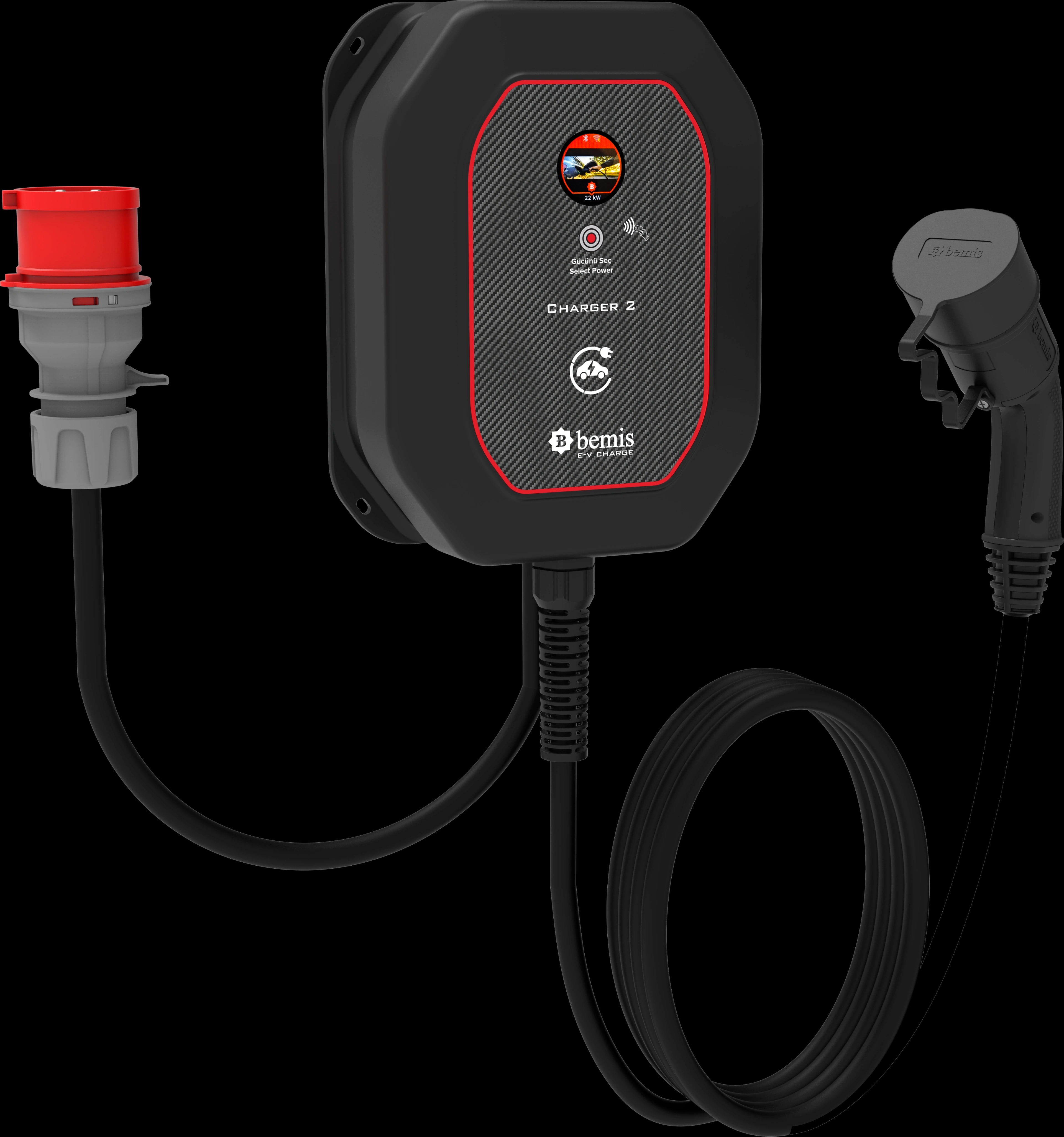
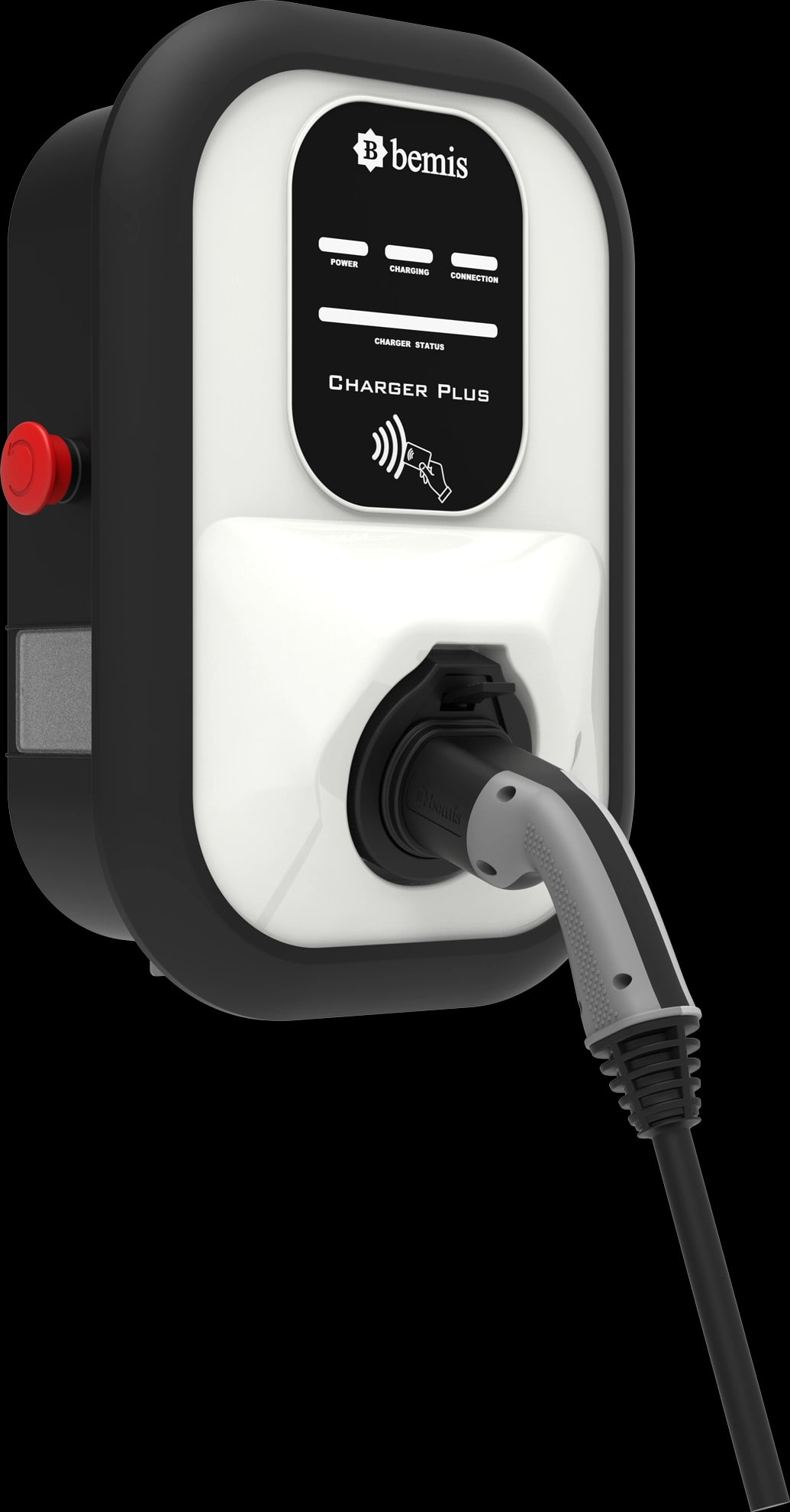
The Bemis Charger Plus 2 and Pro 2 models are OCPP compatible, support load sharing and identify users via RFID; on versions with a MID meter, consumption can be tracked from the device. In common-area scenarios these three features should be considered together.
See the AC charging station models suitable for apartment and residential complex car parks.
Wallbox Charging StationsImportant note
This article is for information only and does not constitute legal advice. Legislation may change; we recommend confirming the current version of the provisions above through the Official Gazette or the relevant administration, and consulting a qualified electrical project engineer and the building management before proceeding.
Frequently Asked Questions
Is it mandatory to install an EV charging station in an apartment building?
There is no obligation to install a charging unit in existing buildings. The obligation applies to buildings yet to be constructed: under the Parking Regulation, in new buildings with 20 or more mandatory parking spaces, the building permit application must show that at least five percent of the parking area (and at least one space) is arranged for electric vehicles, including a charging unit. In an existing apartment building, installation is not an obligation but a choice that depends on the decision of the flat owners and the suitability of the electrical infrastructure.
How many people must approve installing a charging unit in a shared car park?
Previously the approval of four fifths of the flat owners was required. With the circular of the Ministry of Environment, Urbanisation and Climate Change, charging units in common areas were removed from the scope of construction work and the approval threshold was lowered to an absolute majority, that is more than half of the flat owners. The decision can be taken at the ordinary general assembly or at an extraordinary meeting and must be recorded in the minutes. Installation in an enclosed garage that is your own independent section falls outside this process.
Is a building permit required to install a charging station?
No building permit is required for charging units to be installed in the car parks of existing residential complexes and apartment buildings; this is one of the rules that clearly makes installation easier. However, not needing a permit does not mean the electrical side is unregulated: the supply line must be engineered, the protective equipment selected and the connection work carried out by qualified people, and the opinion of the relevant distribution company must be obtained for the electrical connection.
Are the ratios different in shopping centres and public car parks?
Yes. In new district car parks, public car parks and shopping centre car parks, at least ten percent of the parking spaces must be arranged for electric vehicles. Shopping centres have an additional condition based on size: in shopping centres larger than thirty thousand square metres at least one of the charging units installed, and in those larger than seventy thousand square metres at least two, must have fast-charging capacity.
Can I open the charging unit in my complex to outsiders for a fee?
In that case the matter moves from the Parking Regulation into the scope of the EPDK Charging Service Regulation for Electric Vehicles. Providing a public charging service for commercial purposes requires a Charging Network Operator Licence from EPDK. An installation where only the residents charge their own cars and no commercial service is provided is not assessed within this scope. This distinction should be clarified before designing any pricing model.
Featured Products
Solutions we manufacture in our own facility, related to this guide.


Let's choose the right product together
Not sure which product fits your vehicle and electrical installation? Get in touch and our authorised dealer or sales team will guide you.
- Manufacturing in our own facility since 1994
- CE-certified product family
- 2-year manufacturer warranty
- +90 542 773 72 94 trade@bemis.com.tr
