Product Categories
AC Wallbox Chargers
3.7 - 22 kW Wall-Mounted Charging Station
AC Mobile Chargers
2.3 - 22 kW Portable Chargers
AC Charging Cables
Type 2 · Mode 3
V2L / C2L Adapters
Vehicle-to-Load & Charger-to-Load Discharge & Battery Charge
Converter Adapters & Extension Cables
Cee Norm and standard converter adapters, portable extension cables
AC & DC Charging Unit Equipment
Type 2, CCS2 Socket, Unit Socket, Holder
Accessories
Carrying Cases, Pedestals & Other
Bemis World
History, brand story, Bemis group
In-House Manufacturing
Made in Türkiye, production, OEM
Blog & News
Guides, news & trade-show updates
Support & Warranty
Start here if your product isn't working
Installation
Animated installation and app connection guide
Apartments
Apartment and residential parking
Calculator
Cost & charge-time calculator
Charger Finder
The right charger in 3 questions
Guides
EV charging guides & articles
FAQ
Ask in your own words
Vehicle compatibility
Which charger and cable fits your car
OEM & Manufacturers
Technical portfolio & engineering support
Become a distributor
Represent Bemis E-V Charge in your country
Charging Network Operators
OCPP equipment, DLM, remote monitoring
Bemis E-V Charge · Blog
Practical EV-charging guides plus the latest Bemis E-V Charge news and trade-show updates.
How fast a Togg charges at home depends on three things: the car's onboard AC charger, your home's wiring and the device you use. This guide covers all three and gives the times with real battery figures.
When a charging cable is thrown loose into the boot it gets dirty, the connector end takes knocks and it fills half the luggage space every time. The right bag is chosen not by the cable alone but by all the equipment you carry.
Installing a charging station at a factory is a different decision from fitting a wallbox at home. The site already has a transformer, a power factor correction panel and a production load that changes by the hour. A correct installation sits on top of those three facts.
A DC charging unit of the same power can come in two different enclosures: one mounted on a wall, one standing on its own pedestal. The difference is not electrical but on site: where you mount it and how the car pulls up decide it.
A charger is not equipment you install and forget. Its only moving part is the connector, and that is where wear begins. A regular checklist catches a fault at the desk instead of on site.
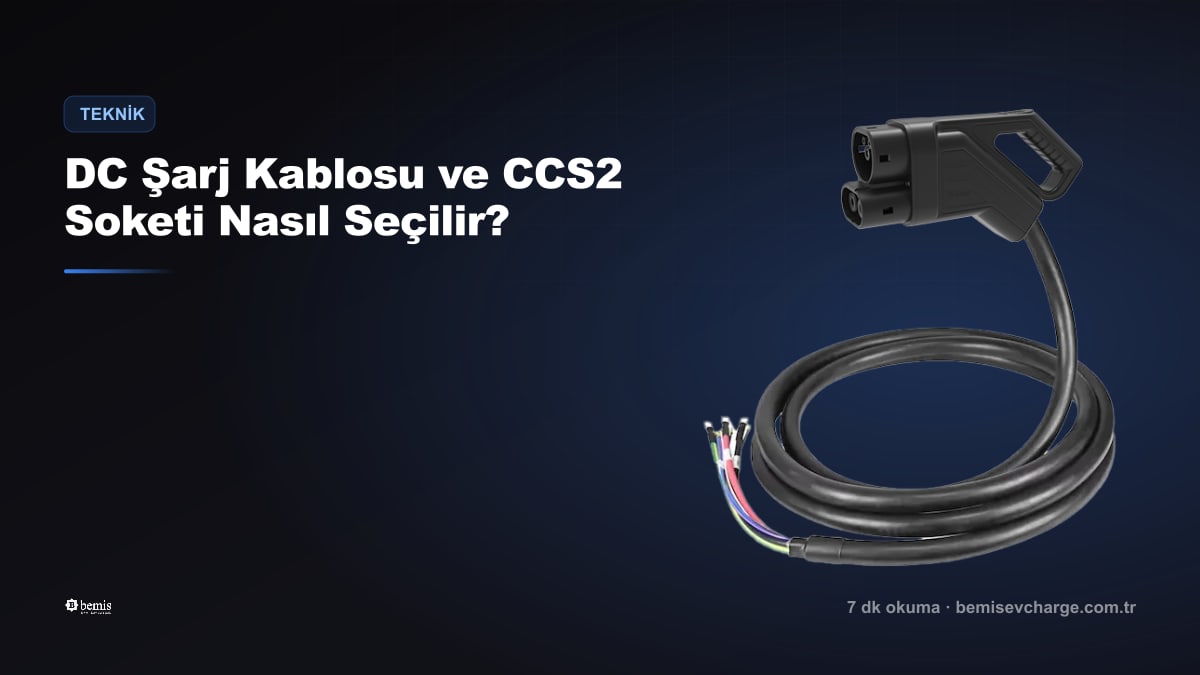
On a DC charging station the part that wears out most is not the unit itself but the cable the vehicle plugs into. The right CCS2 cable comes down to three questions: how many amps the unit outputs, how long the cable should be and how the end will be terminated.
The most useful and least known feature of a portable charger is the current setting. You decide, step by step, how much current the unit draws, which is why the same unit works on a weak household socket and on a three-phase industrial socket alike.
There is power at home and there is a socket, but the socket is not where the car parks. The answer is usually not extending the cable, but choosing a unit with the right cable length from the start.
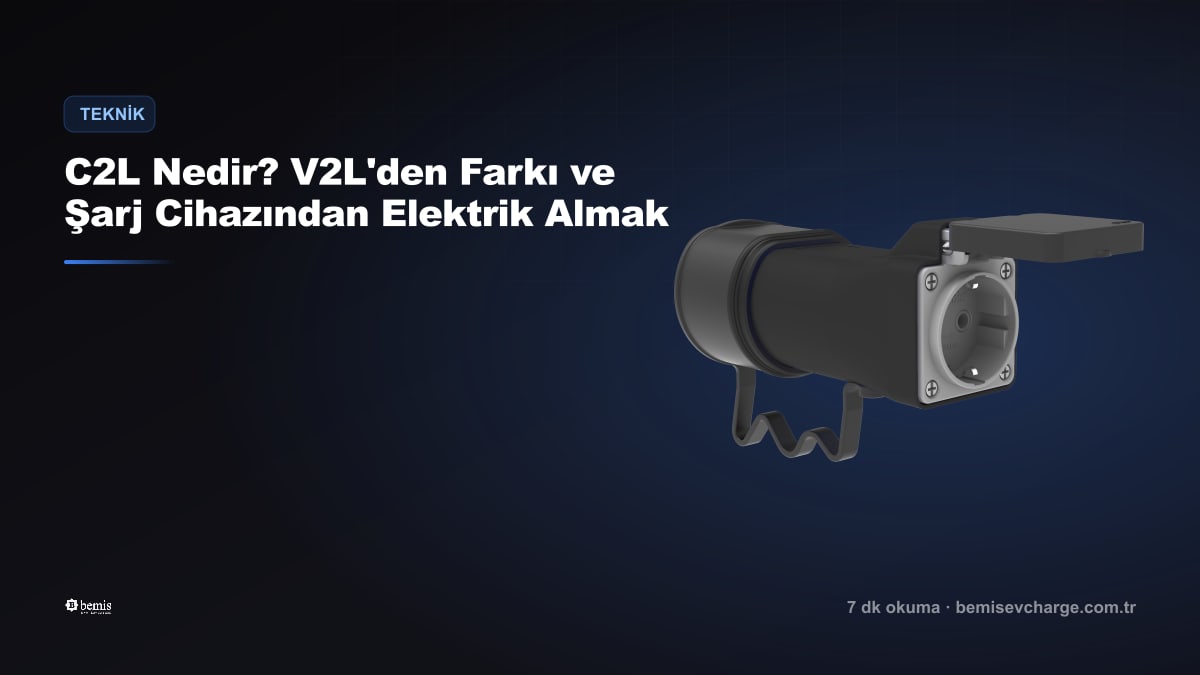
V2L takes power from your car's battery, C2L from the charger on the wall. That is the whole difference in one sentence, but the consequences are very different: C2L never reduces your range and it works even when your car has no V2L.
Three things decide a V2L adapter: your car's brand (the vehicle-side connector follows it), how many sockets you want, and whether you will use it with a cable. Settling them in order prevents buying the wrong product.
In a shared car park the technical part is easy; the real issue is sharing the cost. Who used how much, who is authorised, how will the cost be split? Per-user records solve this from the start: every charge is logged to the person who started it and one statement comes out at month end.
A wallbox is the AC charger mounted on the wall to charge an electric car safely and quickly at home, in a shared car park or at work. How it differs from a socket, power selection, the tethered/socketed decision and the installation steps are all in this guide.
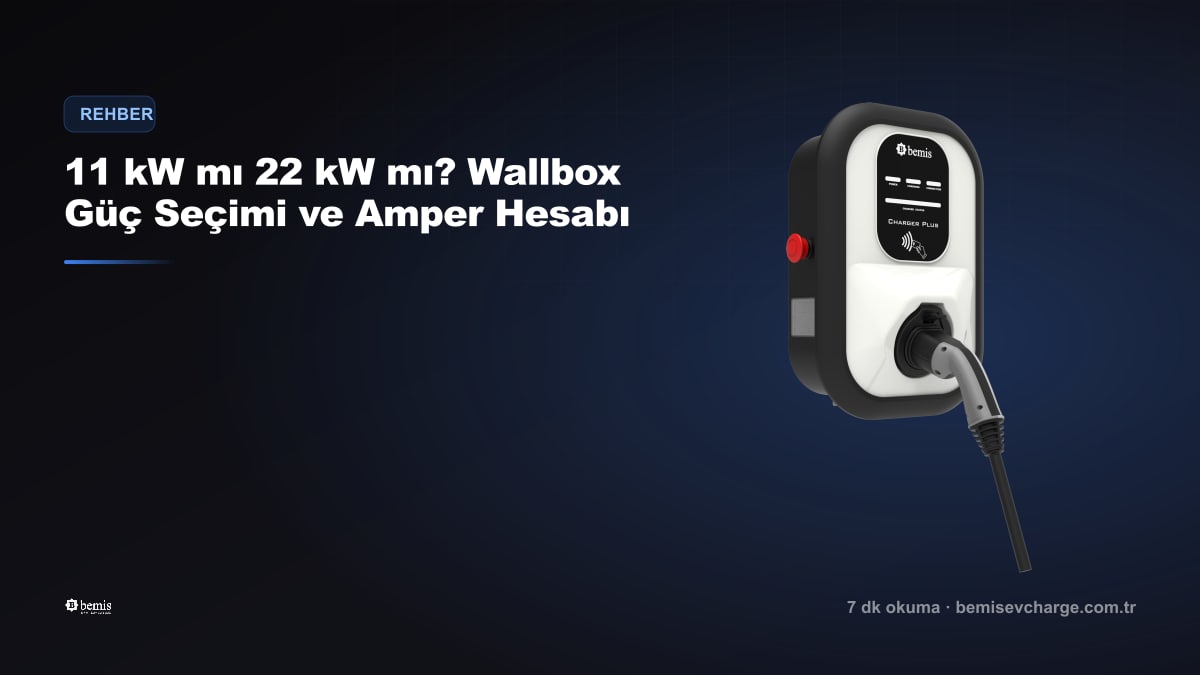
The first question when choosing power is not the device but the car: how many kW does the onboard charger accept? Then the installation: single-phase or three-phase, how many amps? This guide settles the 7.4 / 11 / 22 kW decision with tables.
Two separate sets of rules apply to installing a charging station: the Parking Regulation on the building side and EPDK on the commercial service side. What is mandatory in a new building, what applies to an existing one, and how many votes are needed for a common area?
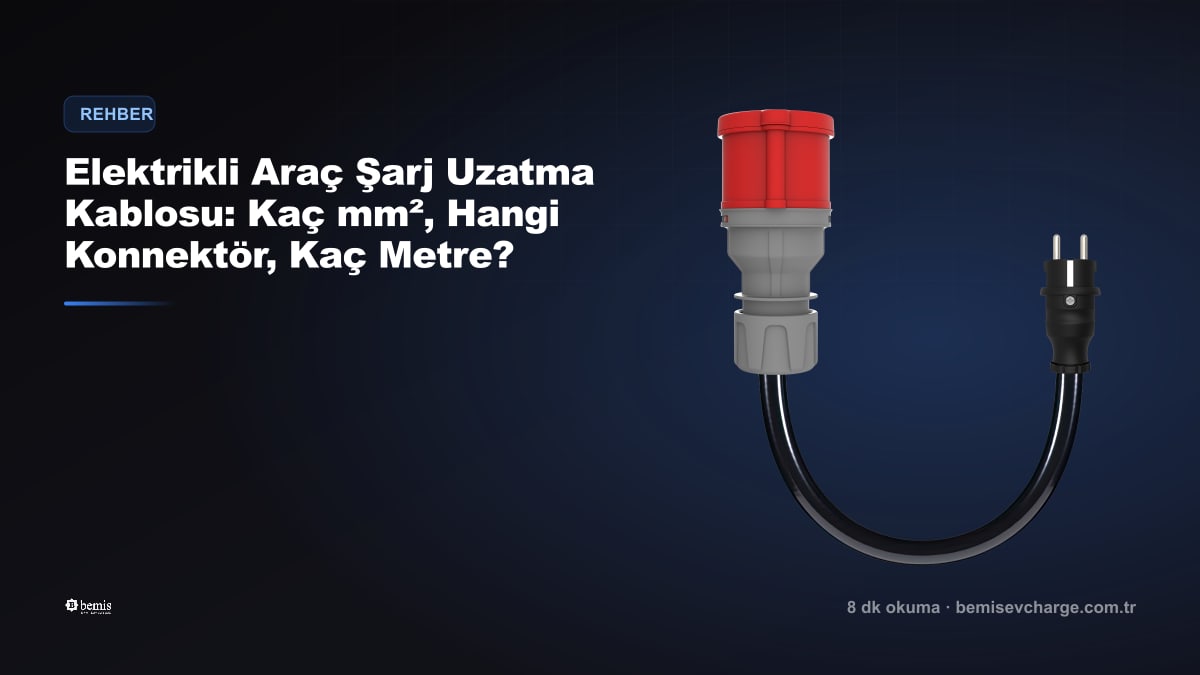
When the socket is out of reach, the first thing that comes to mind is a power strip; but charging means high current for hours on end. How do you choose cross-section, connector type, IP rating and length in an extension cable?
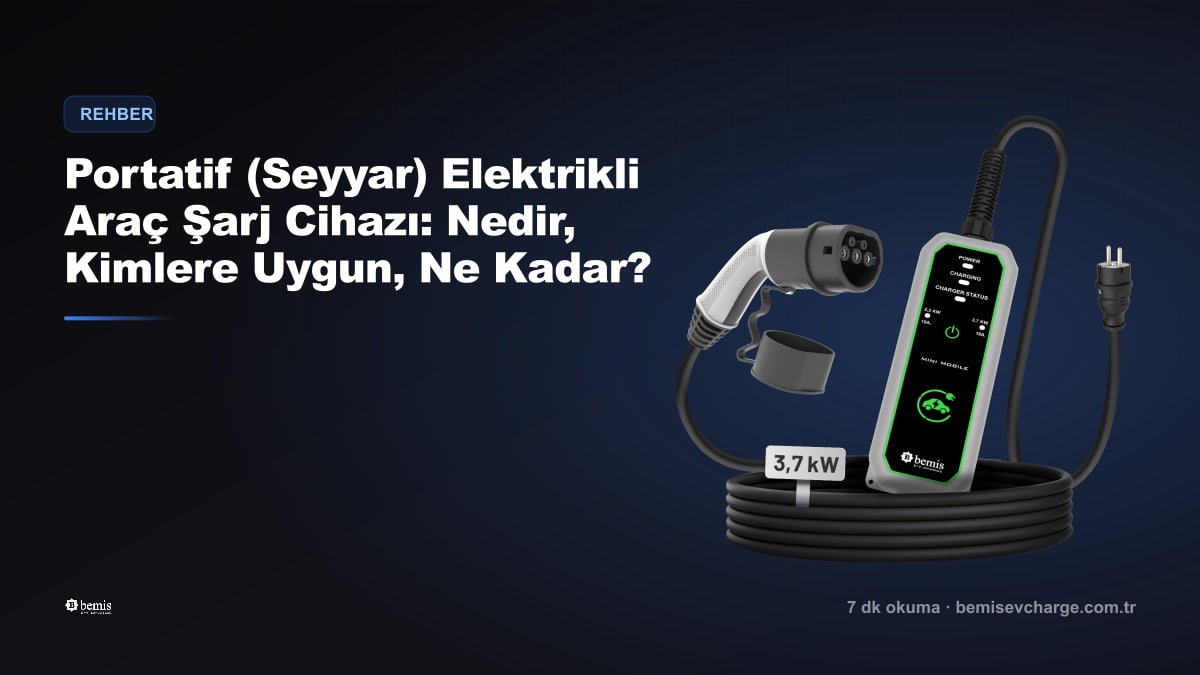
What is a portable (mobile) charger that you plug into a socket to charge your car, who is it for and what determines its price? We explain the Bemis portable charging models with their carrying cases, and how to choose, in plain language.
Cars with V2L are becoming more common. We have gathered the verified 2026 list of V2L-capable models sold in Türkiye (Hyundai Ioniq 5/6, Kia EV6/EV9, Togg T10F, MG, BYD, KGM [Ssangyong] Torres EVX and Skywell), how many kW they deliver, and the right V2L adapter for your car, all in one article.
There are three ways to charge your electric car at home: an ordinary household socket (the slowest), a portable charger and a wall-mounted charger (a wallbox). In this guide we answer the most common questions ("how do I charge my car", "can I use an ordinary socket", "can I fit it myself") in everyday language.
You can charge your car from the solar panels on your roof: in an on-grid system the panels feed the home's distribution board, and the board feeds the charger. Find a worked example of how many panels you need, and the adjustable-current charger features that suit solar best, in this guide.
Charging at home is safe with the right equipment and a sound installation. The limits of charging from an ordinary socket, the risks of extension cables, the residual current device and why a wallbox is the safest route are all in this guide.
Should you install a DC fast charging station at your business? A step-by-step investment guide covering the AC/DC decision based on visit length, choosing between 40-80-120+ kW, the infrastructure pre-check and the operating model.
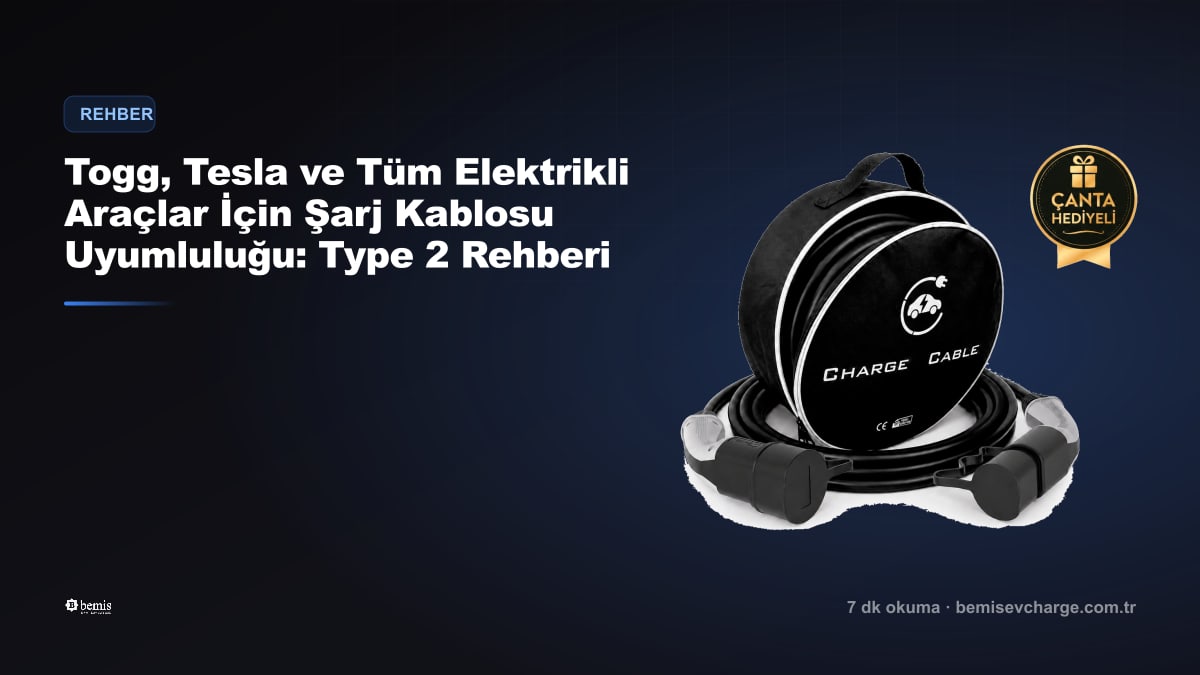
All new electric cars sold in Türkiye and Europe use a Type 2 inlet for AC charging; the right Type 2 cable is compatible with all of them, from Togg to Tesla. Settle the phase, amperage and length choice for your car with this guide.
A cost-effective entry point into DC for shopping centres, hotels, supermarkets and small fleets: how 40 kW DC charging works, how fast it is and where it sits in the Bemis BEVDC series.
How do you work out the cost of charging an EV at home per kilometre? A step-by-step example with kWh consumption, the unit electricity price, 10% charging losses and the night tariff.
The most critical question when buying a wallbox for your home: single-phase or three-phase? We compare the power and charging time of both options and explain which user each one suits, in a decision-focused guide.
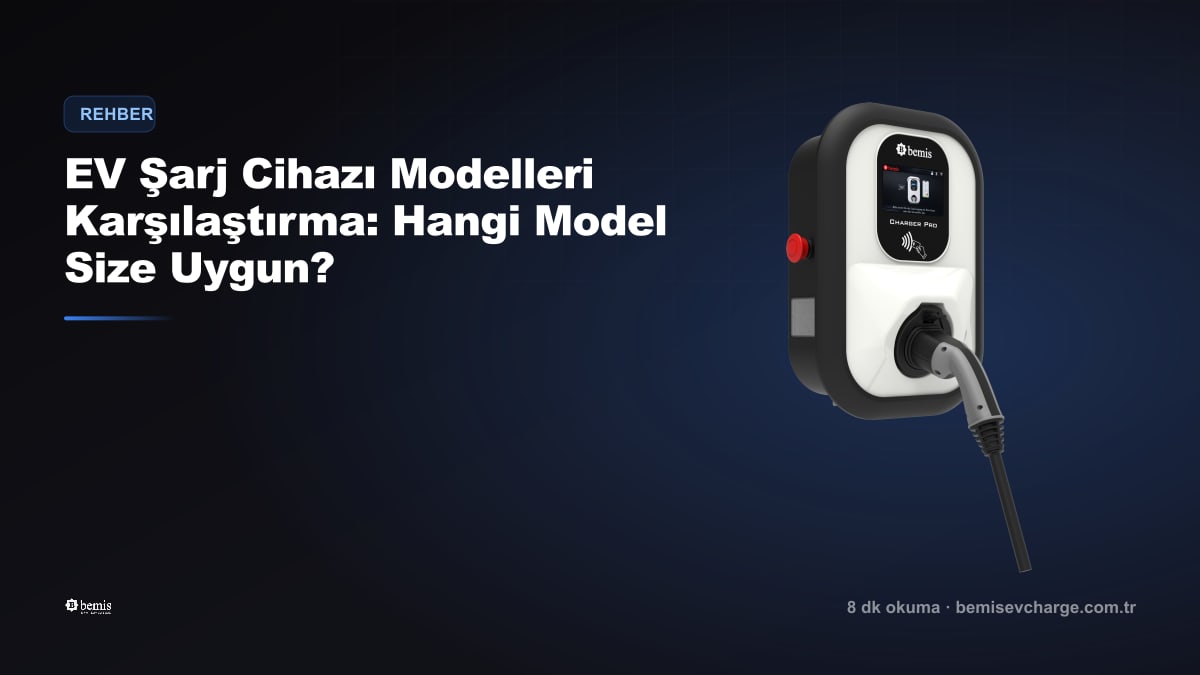
Which charger for home, work or public use? A buyer's guide that compares AC wallbox, DC and portable models by power, phase and OCPP, complete with decision tables.
Is it safe to charge your car in an open car park or in the rain? Outdoor use of charging cables and units, IP protection ratings and safety tips.
There are two ways to charge at home: a wall-mounted home charging unit (wallbox) or a plug-in portable charger. Which is right for you? Their differences and a decision guide.
The two questions most often asked when buying a charging cable: how many amps, and how many metres? A practical guide to choosing the right cable based on your car's power and your parking distance.
How do you install an EV charging station at home, in an apartment complex or at a business? From planning and permits to infrastructure, device selection and commissioning, we've gathered every step in one guide.
Load management is a smart power distribution system that lets you charge multiple vehicles at the same time without exceeding a site's electrical capacity. In this article we explain static and dynamic load balancing, phase balancing and the role of OCPP with practical examples.
A comprehensive guide for companies switching their vehicle fleet to electric, explaining how depot and overnight charging, device-count planning, load management and per-driver reporting are set up. It explains the role of AC wallbox, CCS2 DC and OCPP-compatible models in the fleet scenario.
We explain, end to end, what happens behind the scenes of an electric vehicle charging station: how the vehicle and the station communicate, where the AC and DC paths diverge, and how safety is ensured. From the pilot signal to the slowdown after the battery passes 80%, all the stages are in one article.
We've gathered the terms you need to understand EV charging with clear, concise definitions, grouped by topic: current types, connectors, power units, smart charging protocols and safety ratings.
EV charging time depends fundamentally on battery capacity and charging power. We explain how to calculate the time for AC and DC with a simple formula, and why the vehicle's accepted power limit is the deciding factor, with worked examples.
EV charging connectors can be confusing: what do Type 2, CCS2 and CHAdeMO mean? We define each one, compare their differences clearly, and explain which applies in Turkey and which connector to use at home versus on long journeys.
Looking for an EV charger manufacturer in Türkiye? Here is the clear answer: Bemis E-V Charge produces in Bursa, exports to 80+ countries and offers CE, IP65/IP66 and OCPP-compliant wallbox, Type 2 cable, V2L and DC charging products.
How should you plan electric vehicle charging in each city? A guide to home and workplace charging stations, AC installation and device selection for Istanbul, Ankara, Izmir and Bursa.
What does a home charging station cost depend on, from the device to the installation? We have gathered the factors that determine the price in a plain guide.
Turn your electric car's battery into a portable power source: what is V2L, how many kW do you get from the Ioniq 5, and how do you choose the right V2L/C2L adapter?
AC or DC? We break down how each one works, the difference in speed and cost, and which is the right choice for home or public stations.
How many kW? Socketed or tethered? Why do smart features and safety matter? We walk through choosing a home charger step by step.
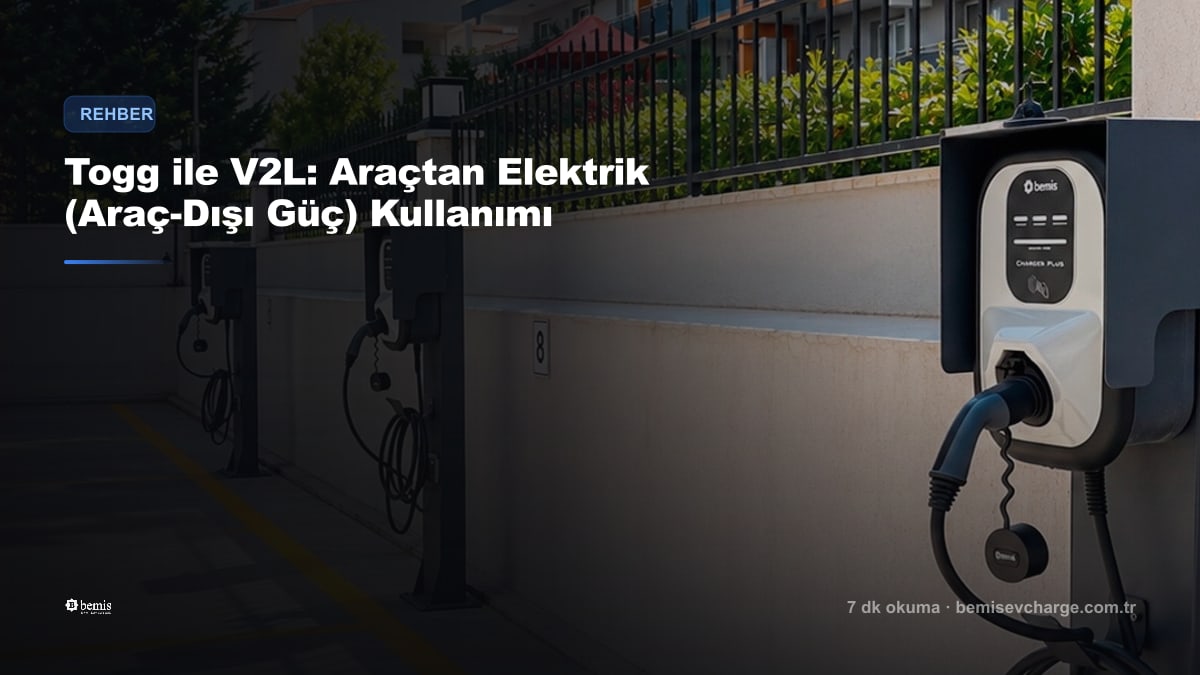
With Togg's V2L feature, turn your vehicle into a portable outlet: how it works, what it's used for, and which V2L adapter you need.
16A or 32A? How many metres? We explain the amperage, power, length and quality criteria to weigh up when choosing a Type 2 charging cable in plain terms.
OCPP is the open standard that lets you connect your charging station to any software you choose. What does it do, and why should you buy an OCPP-compatible device?
Planning to install a charging station in your complex's car park? Here's what you need to know about the owners' association decision, infrastructure, load management and billing.
Why does it make sense to install a charging station in your office, mall or business car park? Six concrete advantages (from attracting customers to extra revenue) and what to watch out for.
How do you charge your Tesla at home? We explain Type 2 AC charging, the cable/wallbox you need and how a Supercharger differs, in plain terms.