Product Category · 19 Products
AC Wallbox EV Chargers
Wall-mounted charging station for your home and workplace
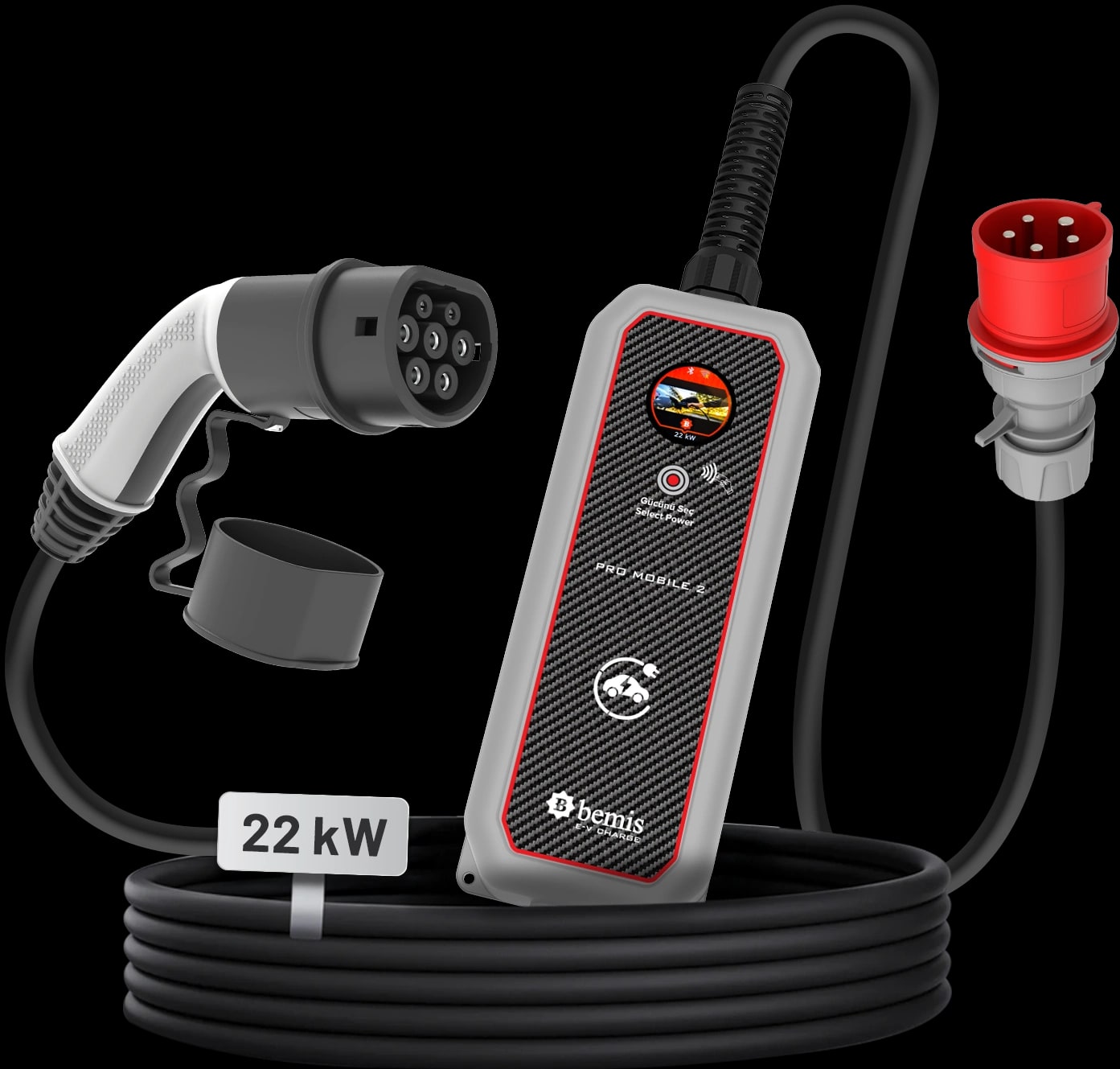
Home (wall-mounted) EV charging station: AC wallbox for houses, apartment car parks, workplaces and residential estates; single-phase 7.4 kW and three-phase 11 kW / 22 kW models, with a Type 2 socket or a 5 m integrated cable. The Charger 2, Charger Plus 2 and Charger Pro 2 series are produced in our own factory in Bursa, Türkiye; CE certified and IP65 / IP66 protected (IP65 for the Charger 2 and Charger Pro 2 with a display, IP66 for the Charger Plus 2 with LED indicators), compliant with IEC 61851 / IEC 62196 and covered by warranty. What is a wallbox? A wall-mounted AC charger that charges your EV safely from the mains. It communicates with the car's onboard charger (IEC 61851), provides residual-current and overcurrent protection and manages the charging current. A domestic socket delivers at most 2.3 kW and is not designed for hours at full load; a wallbox on its own circuit charges 3–10 times faster and safer. Which power? 7.4 kW on single-phase, 11 kW (3×16 A) or 22 kW (3×32 A) on three-phase installations. A typical 60 kWh car fills in about 8 hours at 7.4 kW, 5–6 hours at 11 kW and 2–3 hours at 22 kW; the car's AC acceptance rate is the limit. Charger 2, Charger Plus 2 and Charger Pro 2 are adjustable between 3.7 - 22 kW (6–32 A). Cable or socket? The cabled model has a fixed 5 m Type 2 cable: plug in and charge. The socket model takes your own Type 2 cable and suits shared car parks and multiple vehicles. Models. Charger 2: RFID authorisation, display, Wi-Fi and app scheduling. Charger Plus 2: adjustable power, smart charging algorithm, automatic restart after a power cut, OCPP 1.6 and optional MID meter. Charger Pro 2: additionally dynamic load management (DLM) and user authorisation; GSM (4G) versions connect where there is no internet, integrated MID meter versions record consumption with certified metering for shared and fleet billing. Installation and commissioning are the buyer's responsibility and are carried out by a licensed electrician in line with the Bemis Installation Procedures: a dedicated circuit, a suitable breaker and residual-current protection are required; cable size is determined on site. Installation is not included in the device price. Price depends on power, output type, smart options and installation distance. Request a device quote from an authorised dealer and an installation quote from a licensed electrician.
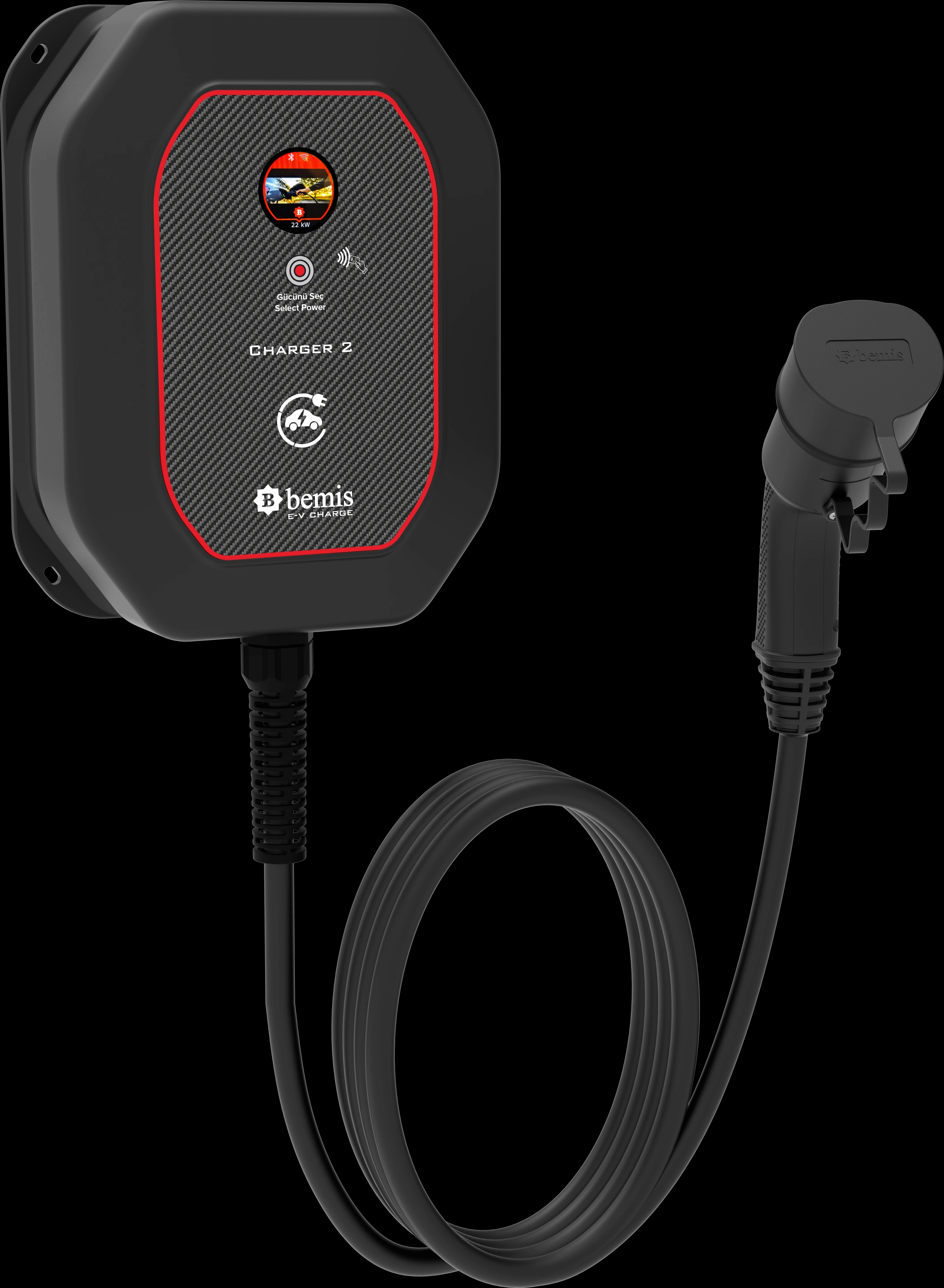
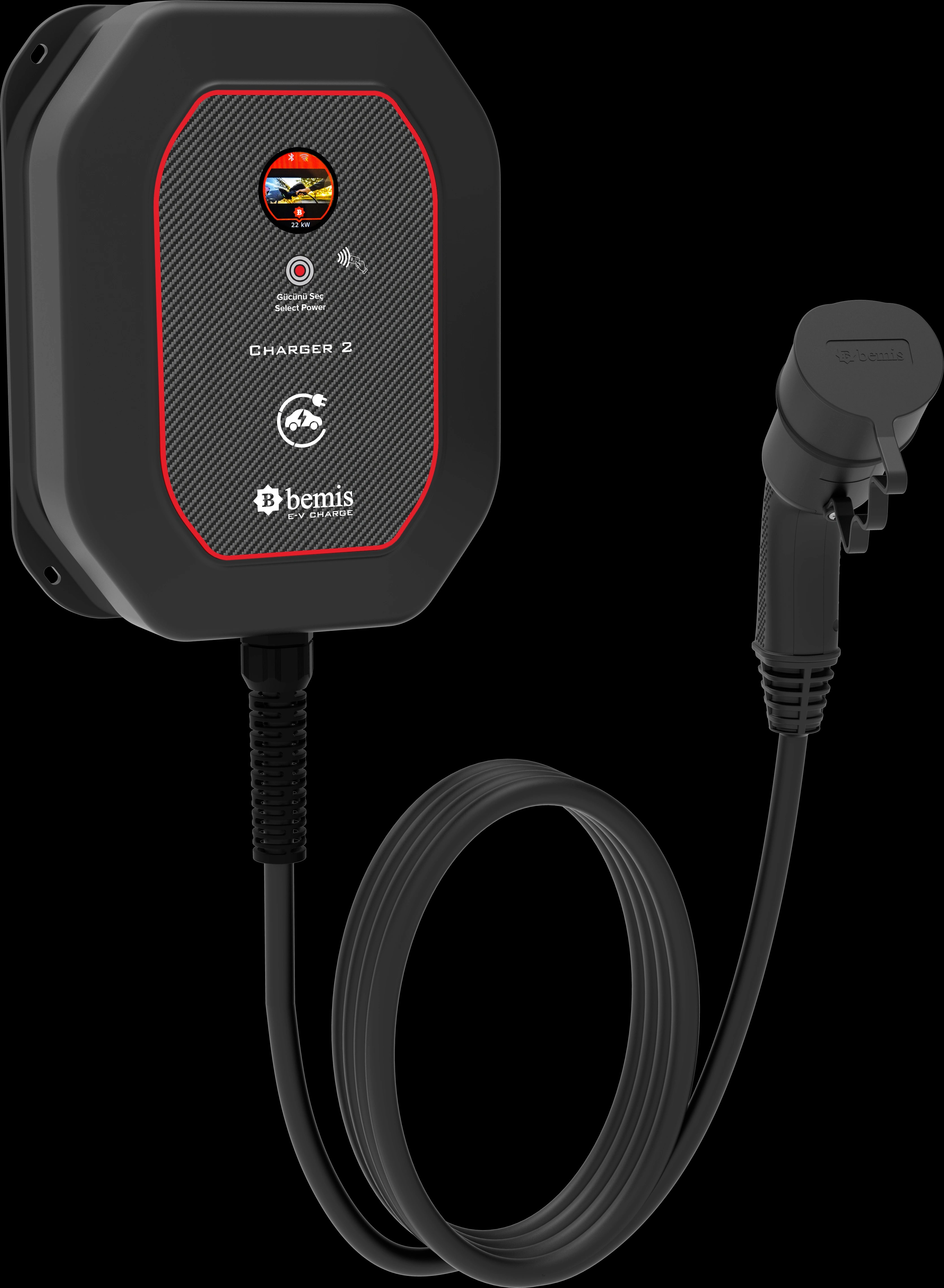
5m. Wired · 3,7 - 11 kW / 16A · 5m. Wired · 3,7 - 22 kW / 32A
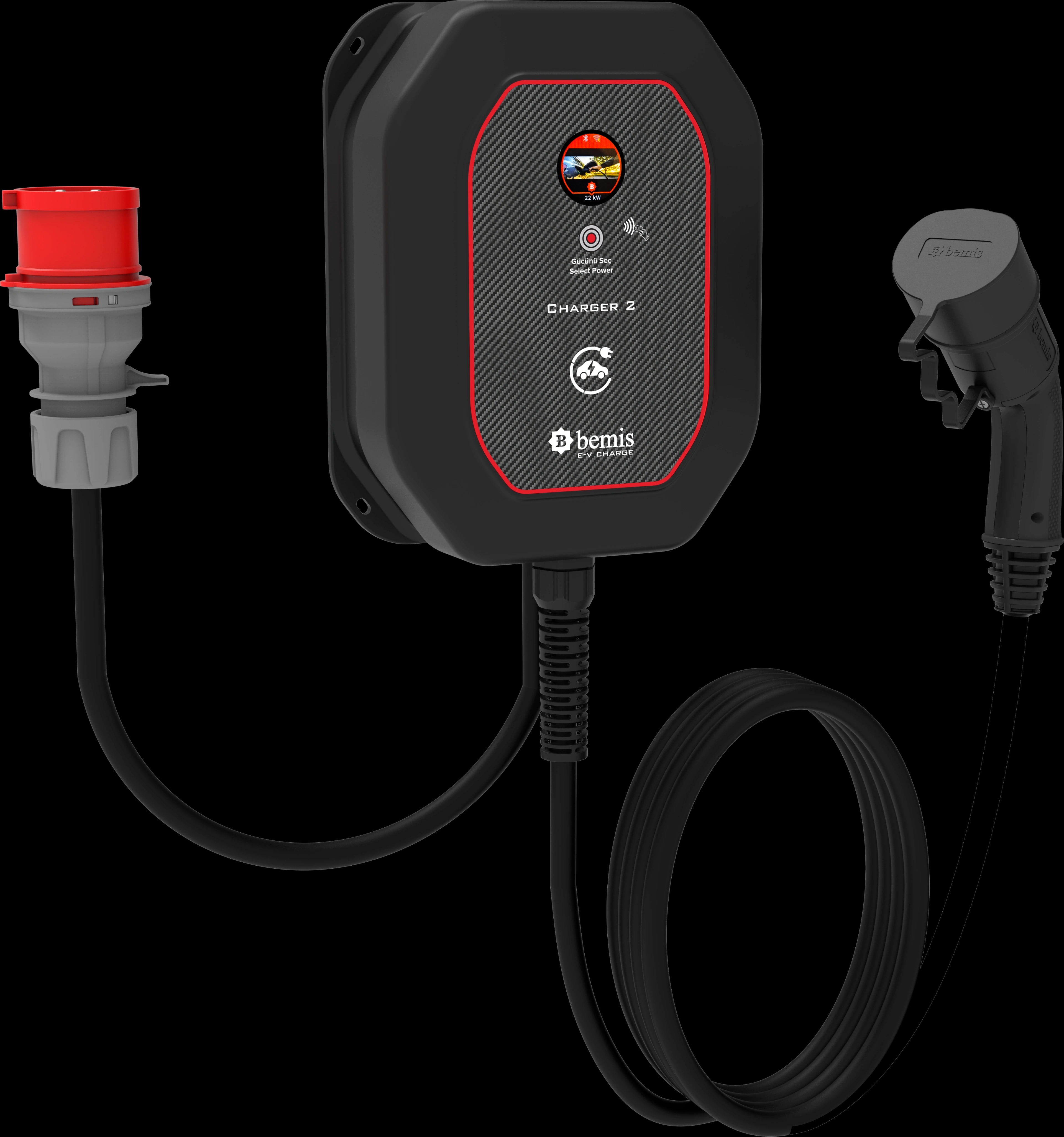
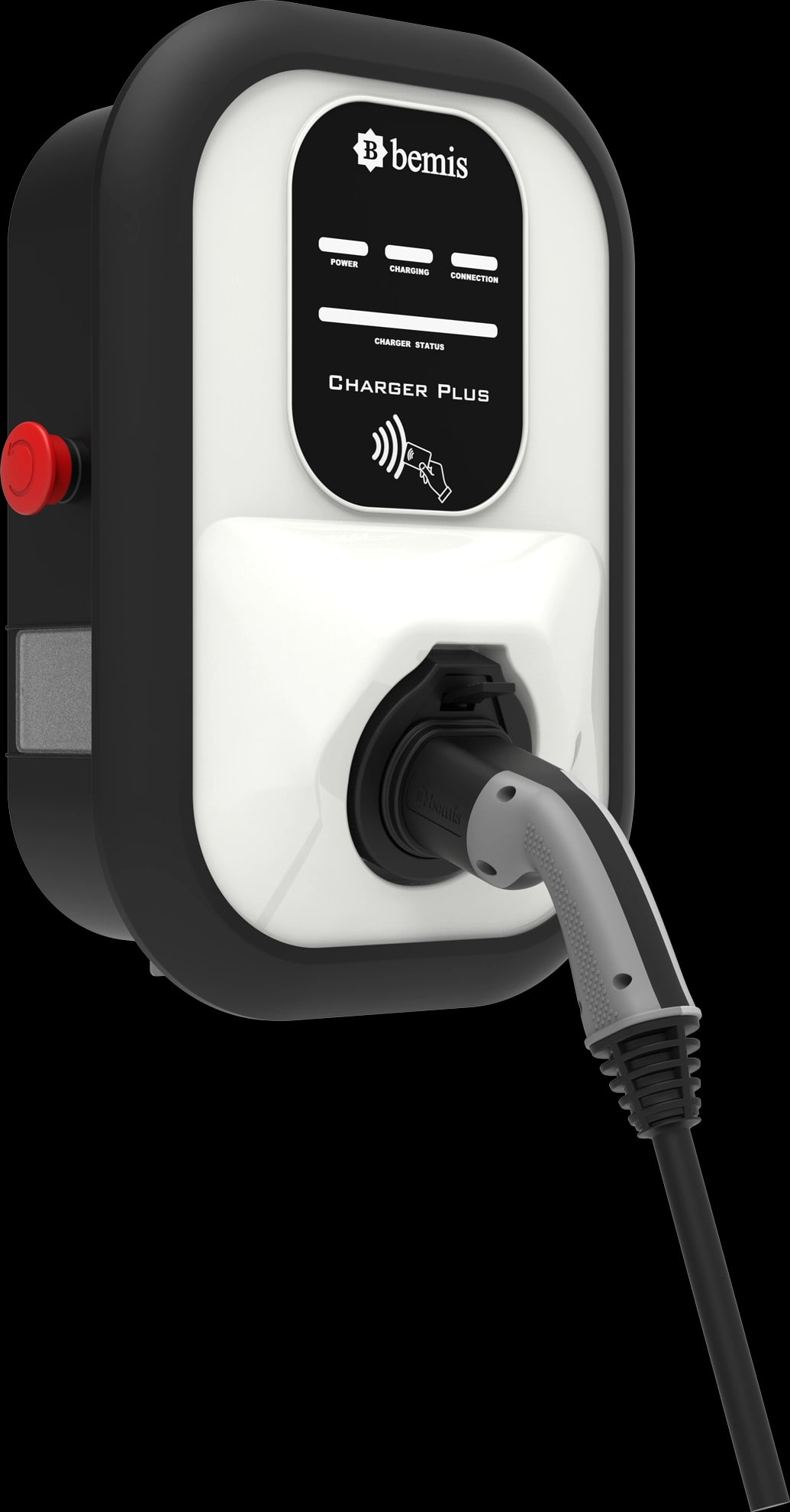
5m. Wired / GSM Module · Integrated MID Meter · Panel Socket / GSM Module · Integrated MID Meter
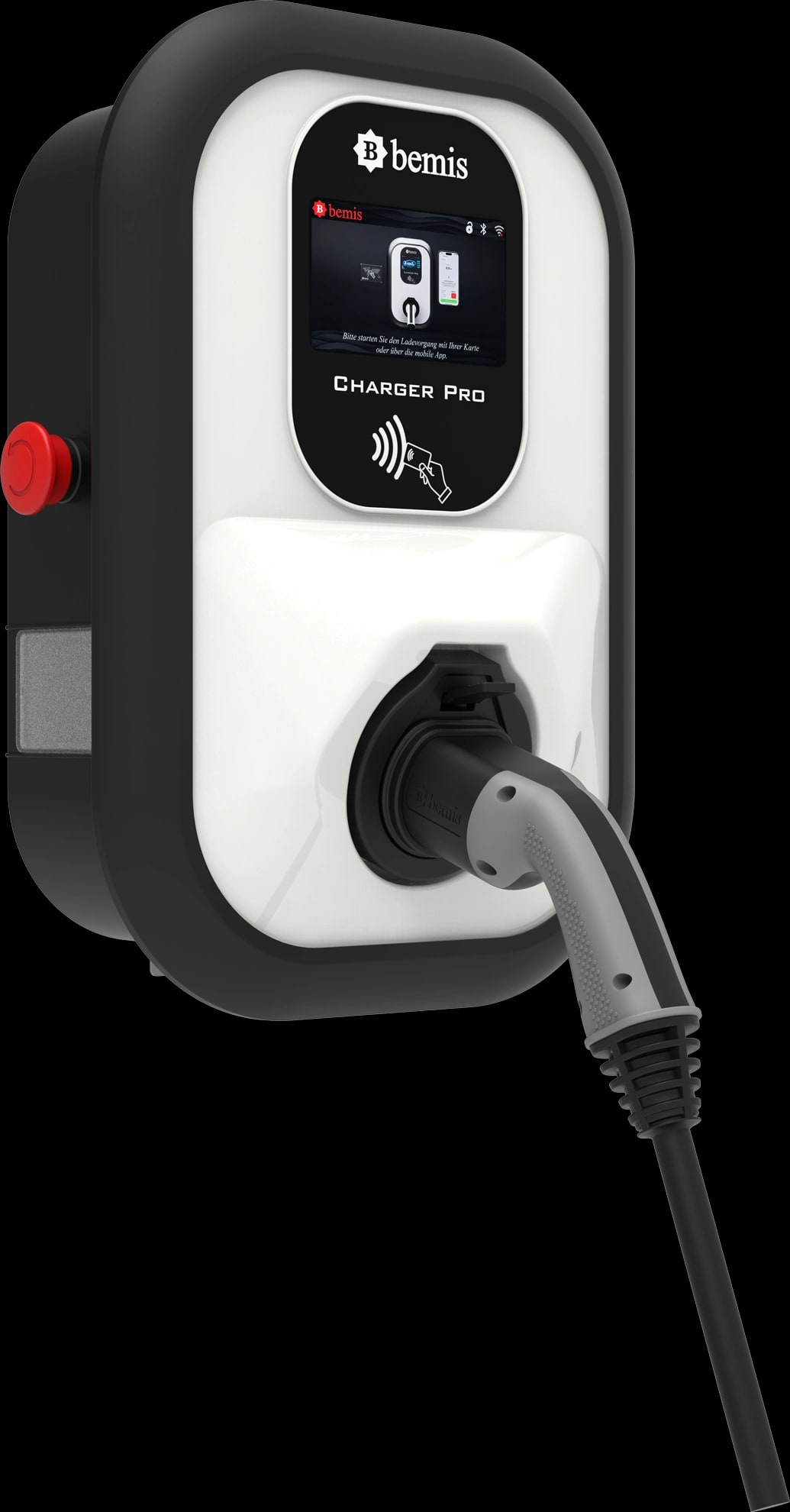

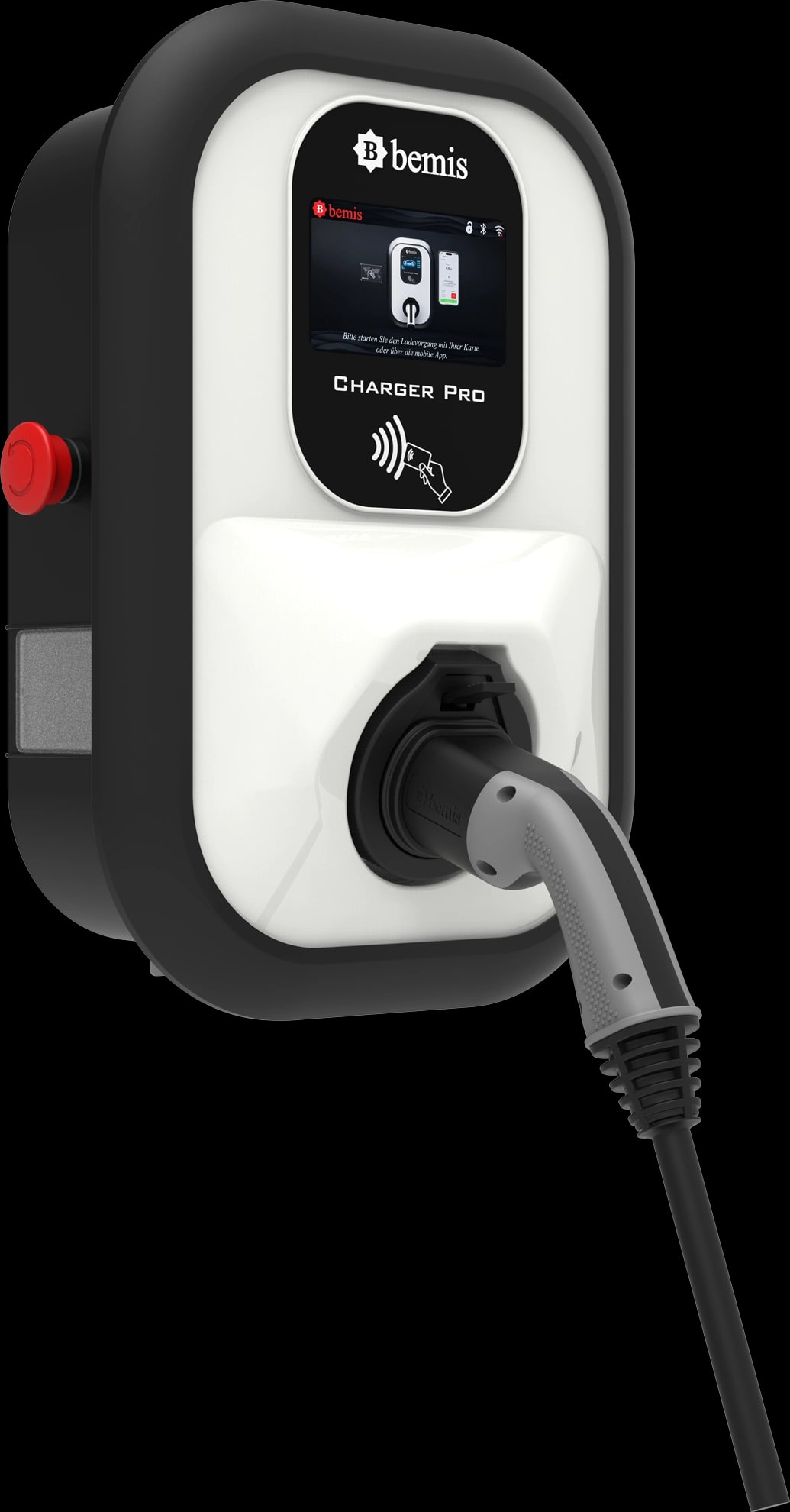
5m. Wired / GSM Module · Integrated MID Meter · Panel Socket / GSM Module · Integrated MID Meter
What is a home wallbox and which power should I choose?
A wallbox is a wall-mounted home or workplace charging station that charges an electric vehicle from the AC grid. The Bemis Charger range is adjustable between 3.7 kW and 22 kW; the real power is set not by the device but by your building's phase and the car's AC limit. On a single-phase installation the ceiling is 7.4 kW, on three-phase it is 22 kW. The connection is Type 2 (IEC 62196-2), available with a 5 metre integrated cable or as a panel socket.
Custom Manufacturing
Your Project, Your Color and Length
Because we manufacture in our own facility, for project-based and bulk orders we can customize the cable length, the cable and connector color (even the device color) to your request. Let's find the best solution for your corporate project together.
- Cable & connector color
- Custom cable length
- Device color & labeling
From our users
Instagram posts about products in this category.
Frequently Asked Questions
Are a home charging station, a wall-mounted charger and a wallbox the same thing?
Yes, all three describe the same product. The AC charger mounted on a wall to charge your electric car at home is called a home charging station, a wall-mounted charger or a wallbox. Bemis's Charger 2, Charger Plus 2 and Charger Pro 2 models belong to this group; installation is carried out by a licensed electrician.
How do I use an AC wallbox charger at home?
Bemis AC wallbox chargers are wall-mounted in both homes and workplaces. In a detached house or villa, a supply line drawn directly from the main circuit breaker is sufficient. In an apartment building you need the building management's approval and an installation plan connected to a shared meter. Installation is carried out by a licensed electrician in line with the Bemis Installation Procedures; our authorised dealer helps you choose the right model.
What is the difference between 7 kW, 11 kW and 22 kW?
7 kW works on a single-phase connection and is enough for overnight charging; it fully charges a typical EV in 6-8 hours. 11 kW and 22 kW require a three-phase connection; with 22 kW the same vehicle is full within 2-3 hours. If your vehicle's AC charging acceptance is 11 kW, buying a 22 kW unit adds no extra speed; check your vehicle manual before purchasing.
Is the Type 2 connector compatible with all electric vehicles?
Yes. All electric vehicles sold in the European market (including Tesla Model 3/Y), Chinese-made BYD and MG models, and Korean and Japanese EVs use the IEC 62196-2 (Type 2) standard on the AC side. Our Bemis wallbox chargers follow this standard; no additional adapter is required.
What is dynamic load balancing?
When other devices on the same grid line draw high power (air conditioner, oven, heat pump), the wallbox automatically reduces its charging power and prevents the breaker from tripping. In multi-wallbox installations it shares the total available power evenly between the units. It is a critical feature that improves safety and reduces infrastructure cost.
What do the IP65 and IP66 protection classes mean?
In both, the first digit 6 means the unit is completely sealed against dust; the second digit is water resistance: IP65 protects against water jets from any direction, IP66 against stronger water jets. The Charger 2 and Charger Pro 2 with a display are IP65 and the Charger Plus 2 with LED indicators is IP66; they do not need an additional protective cabinet in open car parks, balconies or outdoor installations.
Is installation included?
Installation is not included in the price of the unit. Installation and commissioning are the buyer's responsibility: a licensed electrician carries out the cable routing, wiring and distribution board work in line with the Bemis Installation Procedures. The installation cost depends on your existing infrastructure and is clarified in your electrician's site survey; our authorised dealer can refer you to a licensed electrician.
What is a wallbox and how does it differ from a domestic socket?
A wallbox is a wall-mounted AC charger for electric vehicles. A domestic socket delivers at most 2.3 kW and is not designed for hours at full load; a wallbox on its own circuit delivers 7.4–22 kW, communicates with the car (IEC 61851) and provides residual-current and overcurrent protection. The result is 3–10 times faster, safer charging.
What determines the price of a home charging station?
Power (7.4 / 11 / 22 kW), output type (5 m cable or socket), smart options (OCPP, GSM module, MID meter) and the installation work (cable run, breaker and distribution-board work). Installation is not included in the device price; you receive a separate installation quote from your licensed electrician after a site survey.
Should I choose 11 kW or 22 kW?
Check the car's AC acceptance rate first: most EVs accept 11 kW, some are limited to 7.4 kW and only a few accept 22 kW. For one car parked overnight, 11 kW is more than enough; 22 kW makes sense for fast daytime top-ups or several cars in a row. Charger Plus 2 and Charger Pro 2 are adjustable between 4 and 22 kW, so you will not need a new device when you change car.
Which breaker and supply does a 22 kW wallbox need?
22 kW needs a 3×32 A three-phase supply, 11 kW a 3×16 A three-phase supply and 7.4 kW a 32 A single-phase supply; residual-current protection is required in every case. The cable cross-section depends on the distance from the distribution board and is determined by a qualified electrician.
Can a home charging station be installed in an apartment or estate car park?
Yes. You need the building management's approval and a metering plan (your own meter or a shared supply). For shared use, MID meter models separate consumption with certified metering, and RFID plus OCPP report who charged how much.
Recommended products
Frequently chosen together with this category

EV Charging Accessories