How to Choose an Electric Vehicle Charger for Your Home
The first question after buying an electric vehicle is usually the same: "Which charger should I get for home?" The right charger runs trouble-free for years, handing your vehicle back to you fully charged every morning; the wrong one means both slow charging and a safety risk. Here are the 5 points to weigh up when choosing a home charger.
1) Power: 7.4 kW or 11/22 kW?
Power depends on both your home's electrical infrastructure and your vehicle's on-board charging capacity. A single-phase installation generally allows 7.4 kW; a three-phase installation allows 11 or 22 kW. But if your vehicle's on-board charger accepts 11 kW, buying a 22 kW unit brings no extra speed. For most home users, 7.4–11 kW provides a comfortable overnight charge.
The rule: first look at the vehicle's AC acceptance rate (most models 11 kW), then at the electrical installation (single-phase tops out at 7.4 kW; 11 and 22 kW require three-phase). For overnight charging 11 kW is enough; if your installation is unclear, start with a device adjustable between 4 and 22 kW and raise the power later. For amperage, breaker ratings and charging times for a 60 kWh battery, see the guide "11 kW or 22 kW?".
2) Socketed or tethered?
- Tethered: the cable is fixed to the unit; you come home and plug in, the most convenient option.
- Socketed: the cable is separate; it offers flexibility with different vehicles and cables, and the cable can be replaced when needed.
- A socketed model is usually more practical in an apartment or shared car park, while a tethered model tends to work better in a private garage.
3) Smart features
OCPP compatibility (remote management / the ability to connect to a charging network), a mobile app, scheduled charging (starting during a cheaper night-time tariff), load management (balanced charging that does not overload the home's main fuse) and user authorisation (RFID) all carry a unit forward from today into tomorrow. Bemis devices are designed to be OCPP compatible.
4) Safety and certifications
- CE conformity and the relevant IEC standards (IEC 61851).
- An adequate protection rating for outdoor use (e.g. IP65): resistance to dust and water.
- Built-in residual current protection (RCD / DC leakage): lowers the cost of separate switchboard equipment.
- Overcurrent, overvoltage and temperature protections.
5) Installation and brand
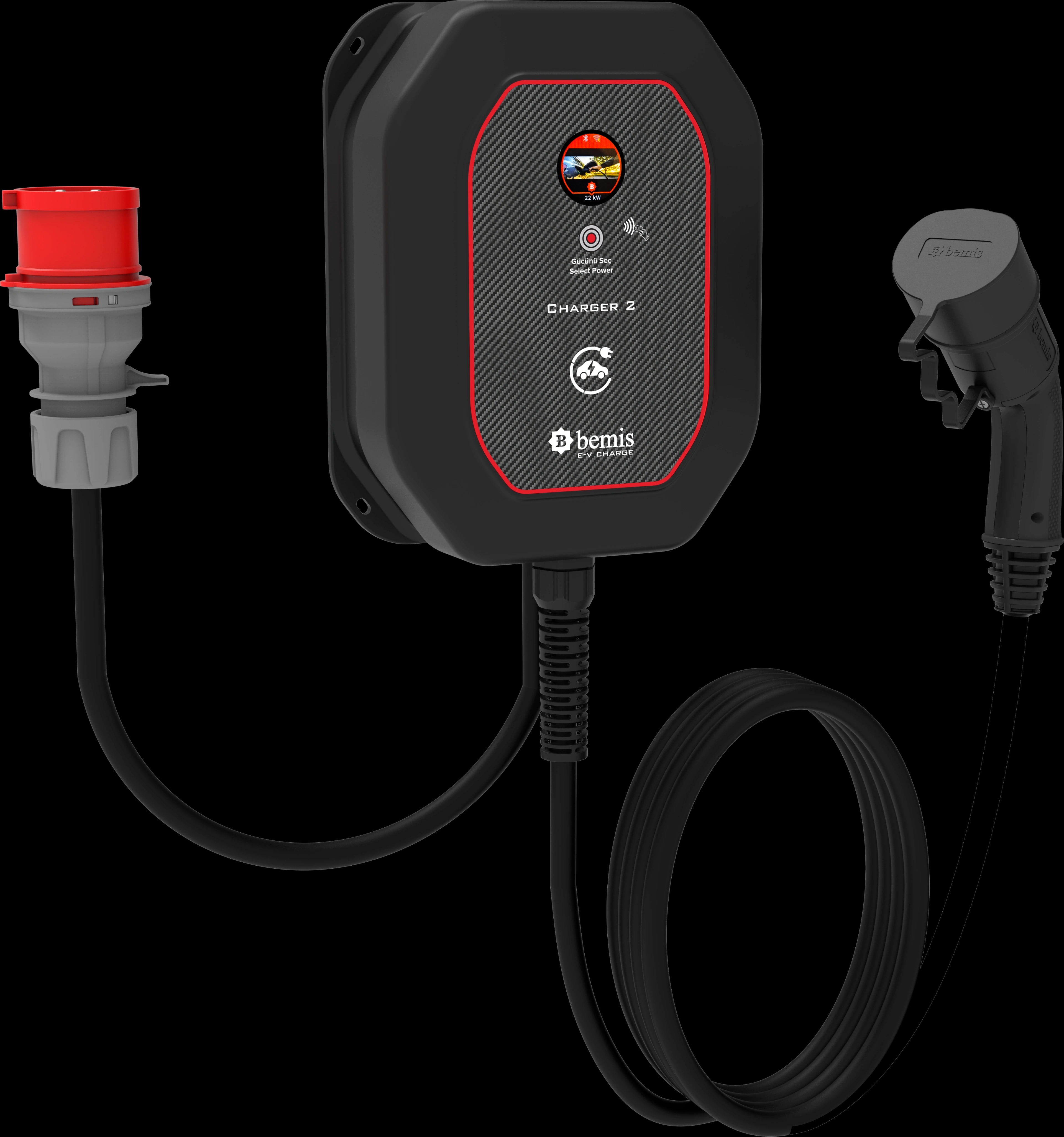
A charger should be installed by a qualified electrician, preferably on a dedicated line with appropriate protection. Choosing a manufacturer you can easily reach for spare parts, warranty and technical support makes a difference in the long run. Bemis is an EV charging equipment manufacturer producing at its own facility in Bursa; it offers a complete home ecosystem with AC Wallboxes, portable chargers, cables and adapters.
The Bemis range: which solution is used where?
| Solution | Power / Current | Connector | Protection | OCPP | Where it's used |
|---|---|---|---|---|---|
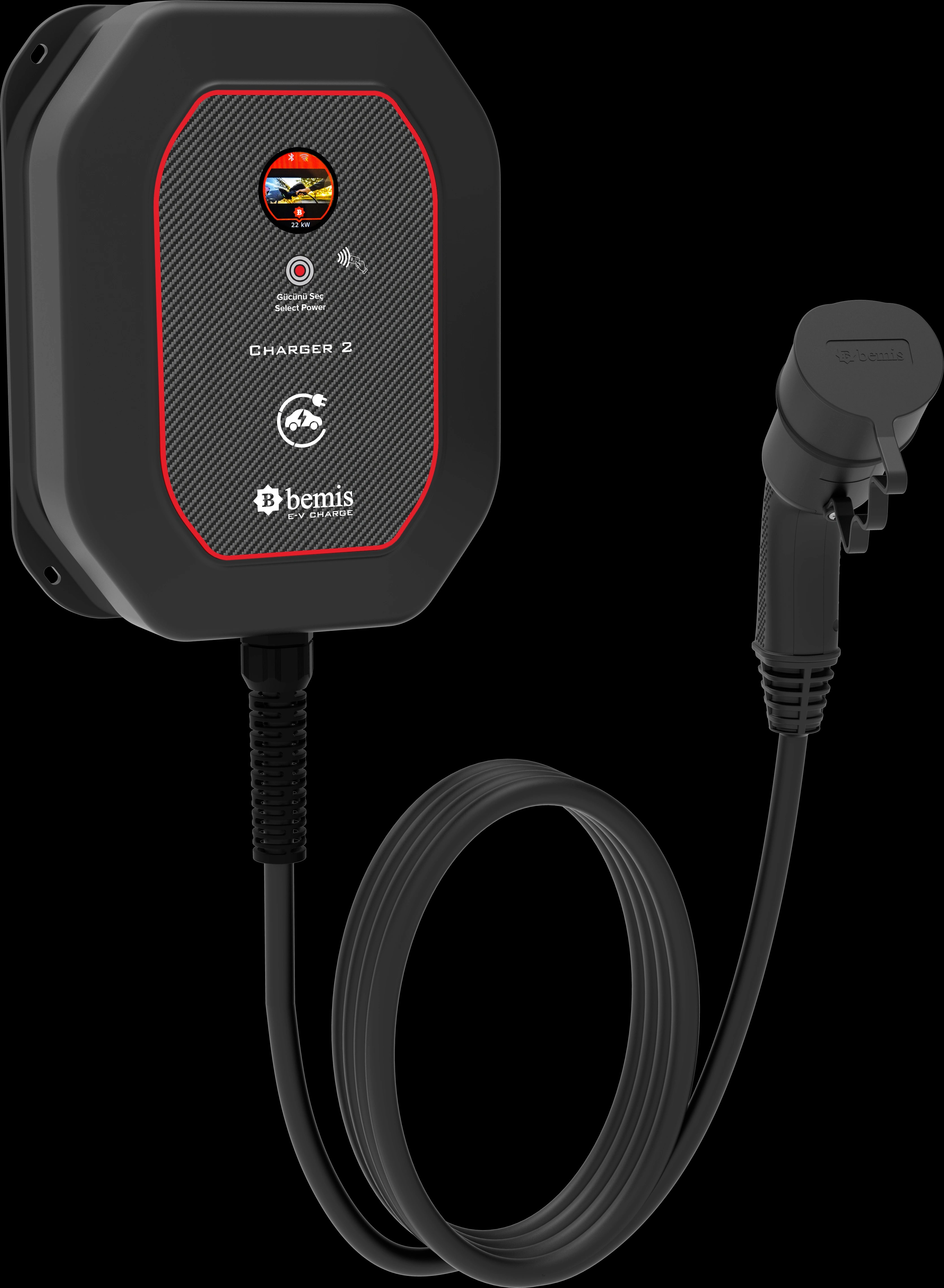
| AC Wallbox (Charger · Plus · Pro) | 3.7–22 kW | Type 2 | IP65 / IP66 | 1.6 | Home · workplace · residential complex |
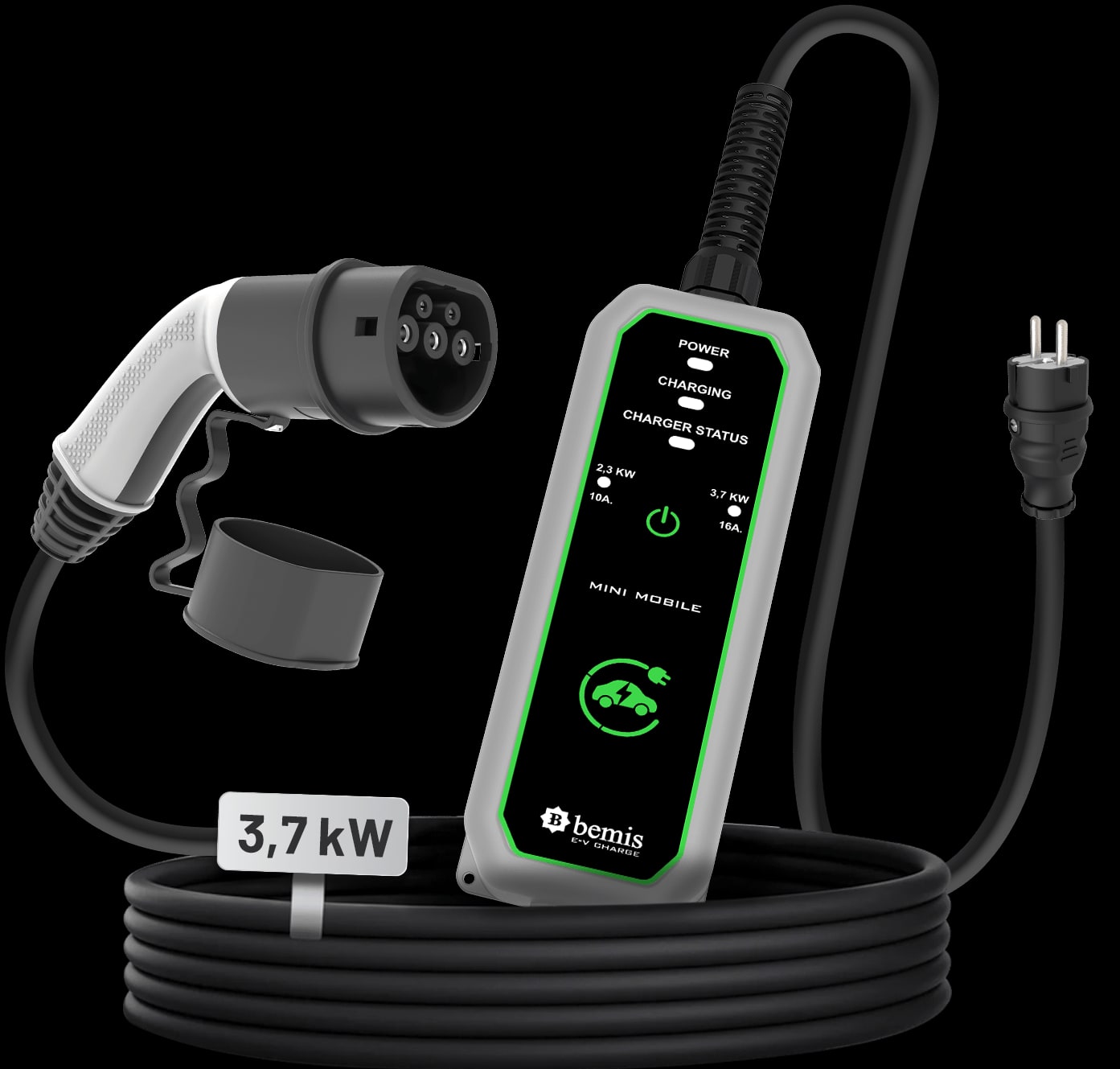
| Portable (Mini · Mono · Pro Mobile) | Single and three phase | Type 2 / Schuko | — | — | On the move · backup · on the road |
| DC Fast Charging (BEVDC 40–200) | 40–200 kW | CCS2 | — | 1.6J | Fleet · shared areas · quick top-up |
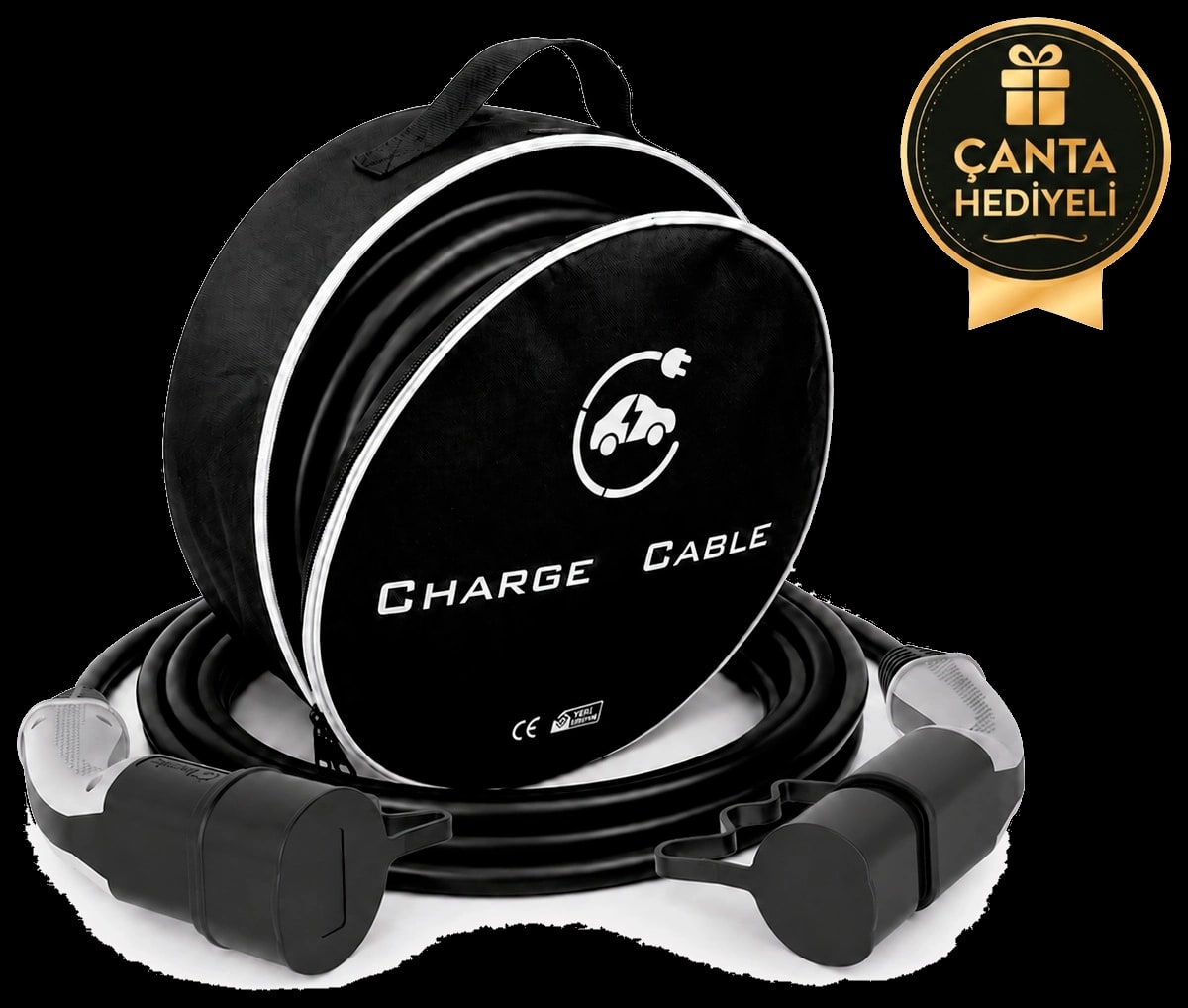
| Type 2 Charging Cable | Single/three phase · 16–32A | Type 2 ↔ Type 2 | — | — | Vehicle–station connection |
| V2L / C2L Adapter | Vehicle (V2L) or charger (C2L) output | Type 2 → Schuko/CEE | — | — | Power from the vehicle (V2L) or charger (C2L) (camping/field) |
Choose the right model for your home: Bemis AC Wallbox and portable chargers.
Explore ProductsFrequently Asked Questions
How many kW does a home charger need to be?
Power depends on both your home's electrical infrastructure and your vehicle's on-board charging capacity. A single-phase installation generally allows 7.4 kW; a three-phase installation allows 11 or 22 kW. But if your vehicle's on-board charger accepts, say, 11 kW, buying a 22 kW unit brings no extra speed; the unit cannot exceed the power the vehicle accepts. For most home users, the 7.4–11 kW range provides a comfortable charge overnight while the vehicle is parked. So rather than more power than you need, it is better to choose the power that suits your infrastructure and your vehicle.
Is a socketed or tethered charger better?
Both have their advantages. In a tethered model, the cable is fixed to the unit; you come home and plug in, which offers the most convenient use and is especially handy in a private garage. In a socketed model, the cable is separate; it offers flexibility with different vehicles and cables, the cable can be replaced when needed, and it is generally more suitable in an apartment or shared car park. So the choice depends on where you use it: a tethered model makes more sense for a single-vehicle private garage, and a socketed model for a multi-user shared car park or where flexibility is wanted. If day-to-day convenience is your priority, lean tethered; if adapting to different vehicles and cables is your priority, lean socketed.
What should I pay attention to in a home charger?
Look at five points: whether the power suits both your home's infrastructure and the vehicle's on-board capacity (7.4–11 kW is enough for most homes); your socketed-versus-tethered preference; smart features such as OCPP compatibility, a mobile app, scheduled charging, load management and RFID; on the safety side, CE conformity and the IEC 61851 standard, a protection rating such as IP65 for outdoor use, built-in residual current protection along with overcurrent, overvoltage and temperature protections; and finally, qualified installation and the support of a manufacturer you can easily reach for spare parts and warranty. Bemis devices are designed to be OCPP compatible and are produced at its own facility in Bursa.
Which smart features matter in a charger?
Smart features carry a unit forward from today into tomorrow. OCPP compatibility provides remote management and the ability to connect to a charging network; a mobile app lets you control the unit from your phone. Scheduled charging lets you start the charge during a cheaper night-time tariff, and load management lets you charge in a balanced way without overloading the home's main fuse. User authorisation (RFID) lets you control who can access the unit. These features are valuable especially in apartments and shared use, as well as for anyone looking to lower energy costs; they extend the life of your device and give you the flexibility to connect to a charging network later. Because Bemis devices are designed to be OCPP compatible, they are ready for this management and network integration from the outset.
Who should I call to install a home charger?
A charger should always be installed by a qualified electrician; it is best connected on a dedicated line with appropriate protection equipment. Correct installation is essential for both safe and efficient operation; a poor installation means slow charging or a safety risk. It is important that the unit has CE conformity and the relevant standards such as IEC 61851, an IP65 protection rating for outdoor use, and built-in residual current protection. Choosing a manufacturer you can easily reach for spare parts, warranty and technical support also makes a difference in the long run. Bemis is a manufacturer producing at its own facility in Bursa.
Featured Products
Solutions we manufacture in our own facility, related to this guide.
Let's choose the right product together
Not sure which product fits your vehicle and electrical installation? Get in touch and our authorised dealer or sales team will guide you.
- Manufacturing in our own facility since 1994
- CE-certified product family
- 2-year manufacturer warranty
- +90 542 773 72 94 trade@bemis.com.tr
