Charging an Electric Car with Solar Energy: Charging from Solar Panels at Home
Yes, you can charge your car with the electricity produced by the solar panels on your roof. In a grid-connected (on-grid) solar system the panels feed the home's electrical installation; and since your home charger is connected to the same installation, a significant part of a charging session started while the sun is producing is covered directly by solar. In this guide we explain in plain language how the system works, how many panels are needed with a worked example, and which charger features work most efficiently with solar.
The idea of charging a car with solar energy brings two investments (the rooftop solar system and the home charging station) together for the same goal: lowering the energy cost per kilometre and running the car on electricity you produce yourself. Let us start with an important clarification: Bemis is a manufacturer of electric vehicle chargers; solar panels and inverters are a separate group of equipment and are engineered by your solar company. The good news is that any properly configured home charging station works smoothly alongside a solar system.
How does charging an electric car from solar panels work?
The great majority of home solar systems are grid-connected, that is, on-grid. The panels produce direct current (DC) electricity from the sun; the inverter converts this into the alternating current (AC) used in the home and feeds it into the main distribution board. From that point on, the energy produced feeds whatever appliance is running at the time: the fridge, the air conditioner and, of course, the electric car charger. If production is less than consumption, the difference is topped up from the grid; if it is more, the surplus is exported to the grid. The whole flow is automatic: when you start charging you do not have to think about which source is being used in the background.
In this architecture the charger's role is clear: the wall-mounted charging station (wallbox) is connected to the home's board and safely transfers the energy coming from the board to the car. Whether the energy comes from the panel or the grid at that moment does not change how the charger operates, which is why you do not need to look for a "solar-specific charger". The hybrid inverter used in systems with battery storage does not change this logic either: the hybrid inverter manages the panels and the battery and feeds the home's board; the home charger still works connected to the board. What really raises the share covered by solar is timing the charge for the hours when production is high and being able to adjust the charging current to match production.
- The panels produce DC → the inverter converts it to AC → the main board feeds both the home and the charger.
- If there is enough sun, charging comes mainly from the panels; if not, the shortfall is topped up from the grid. Charging is never interrupted.
- A wallbox works independently of the panel and inverter brand; no special "solar version" of the charger is needed.
- The board connection and the installation must in every case be carried out by a qualified electrical contractor.
How many panels, how many kW are needed? A hypothetical worked example
The answer depends on your car's consumption and how many kilometres you drive each day. Let us start with a common assumption: an electric car uses roughly 15-20 kWh per 100 kilometres. On that assumption, a driver covering an average of 40 km a day has a daily energy need of around 6-8 kWh; adding the roughly 10% losses during charging, production of about 7-9 kWh a day covers this use.
On the panel side let us also use a hypothetical average: assume that 1 kWp of installed capacity produces an average of 3.5-4.5 kWh a day under Turkish conditions (this varies markedly with the region, the season, the orientation of the roof and shading; these figures are only meant to give an idea). Combining these two assumptions gives the following picture:
| Daily driving | Approximate energy need | Hypothetical panel capacity | Number of panels (assuming 450 Wp) |
|---|---|---|---|
| 20 km | 3-4 kWh | ~1 kWp | 2-3 panels |
| 40 km | 6-8 kWh | ~1.5-2 kWp | 4-5 panels |
| 100 km | 15-20 kWh | ~4-5 kWp | 9-12 panels |
Two notes matter. First, this calculation shows only the car's share; capacity for the home's own consumption (white goods, lighting, air conditioning) is planned separately. Second, production is seasonal: a system that exceeds the daily target in summer may fall below it in winter. The real sizing is settled by the site survey your solar company will carry out, looking at the roof area, orientation, pitch and consumption profile. Use the values here as a first idea and base the investment decision on the survey.
Which charger is suitable for solar energy?
Technically, any AC home charging station with a Type 2 connector works in a home with solar. The feature that makes a difference in efficiency, however, is this: being able to adjust the charging current, and therefore the power. Solar production changes constantly through the day; it peaks around midday and falls in the morning and evening. When you can lower the charging power to a smaller step, the power drawn by the device comes closer to production and a greater share of the charge is covered by the panels rather than the grid. In the hours when production is plentiful, you raise the step and transfer the sun to the car faster.
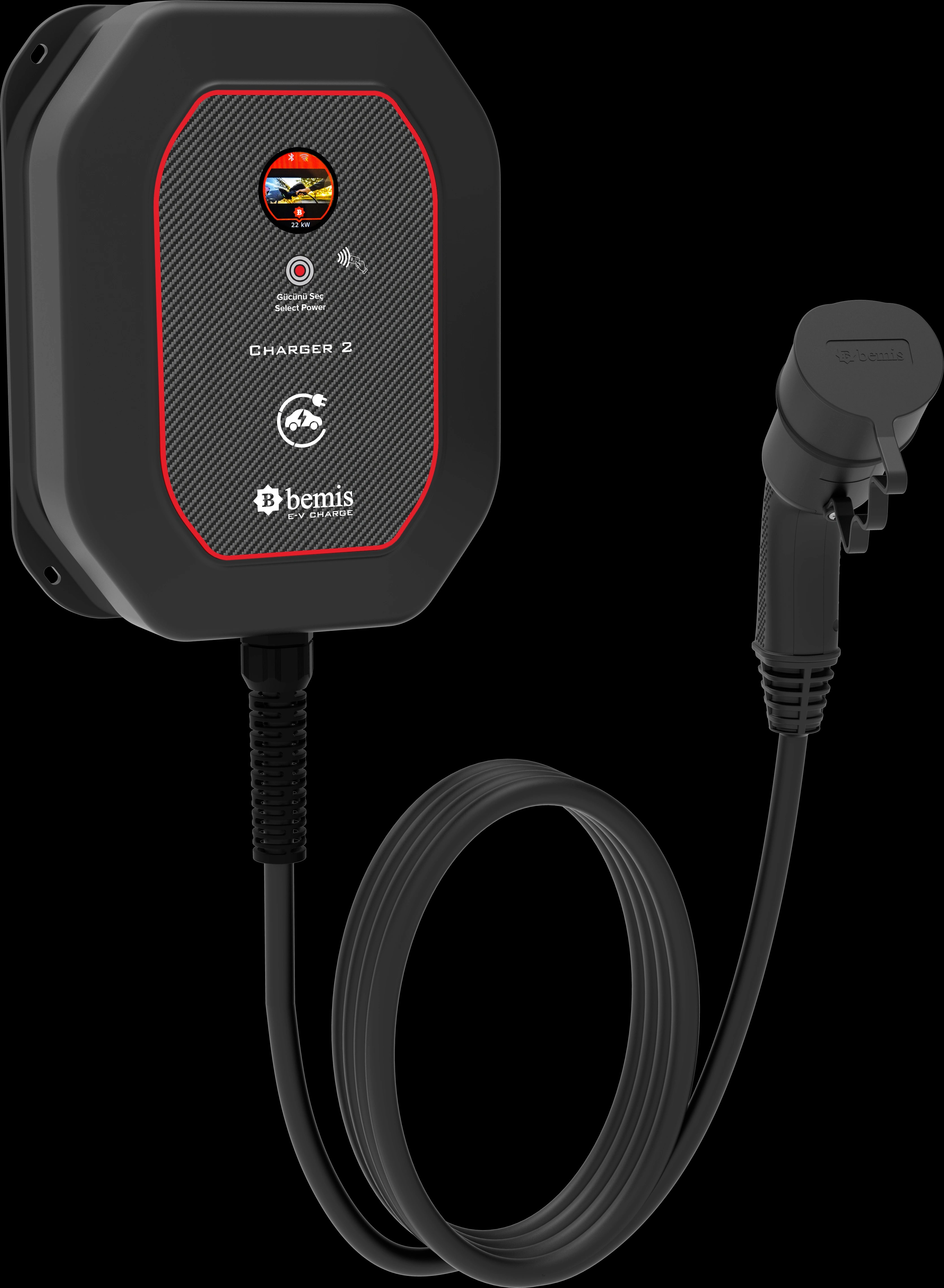
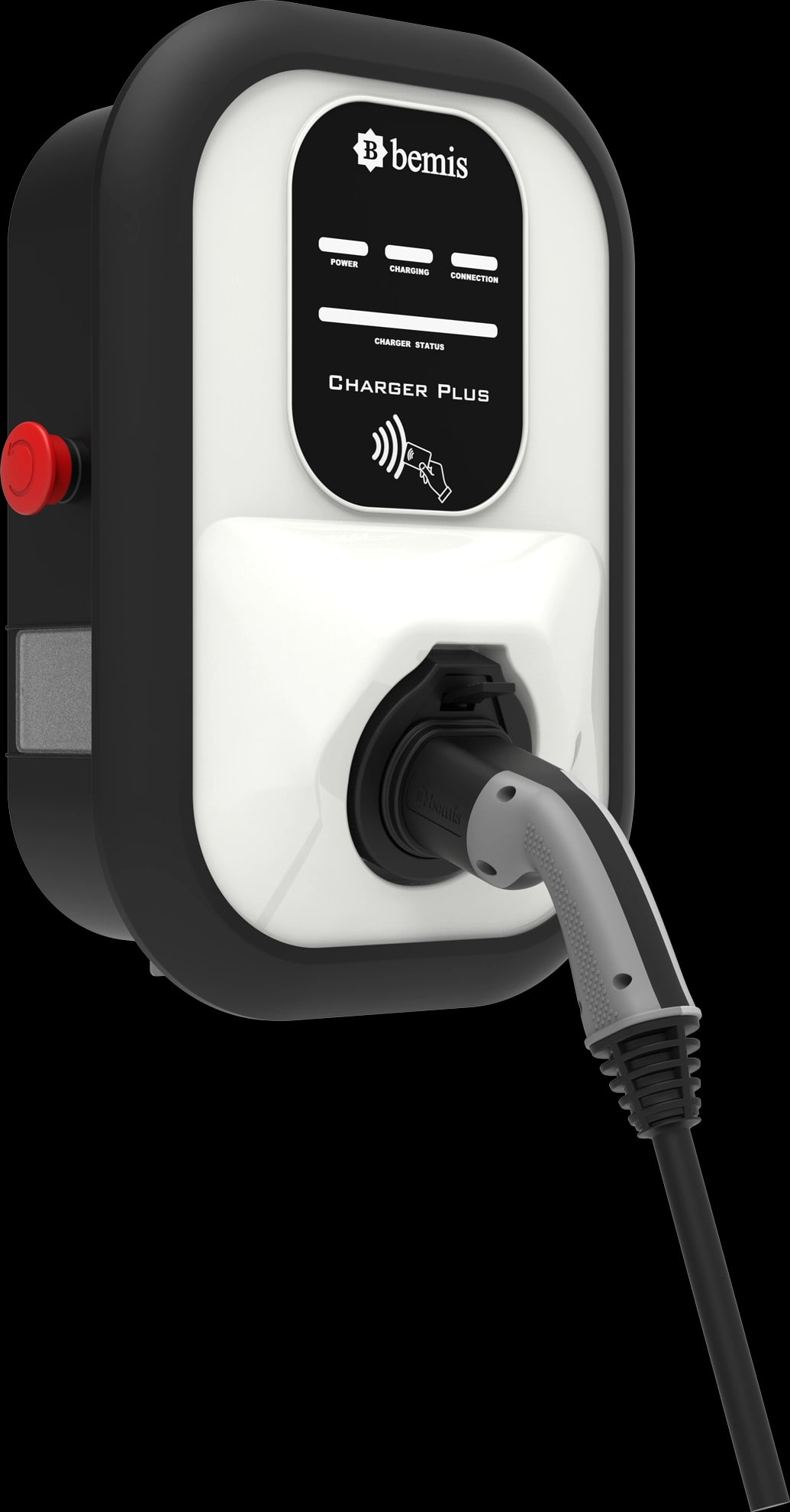
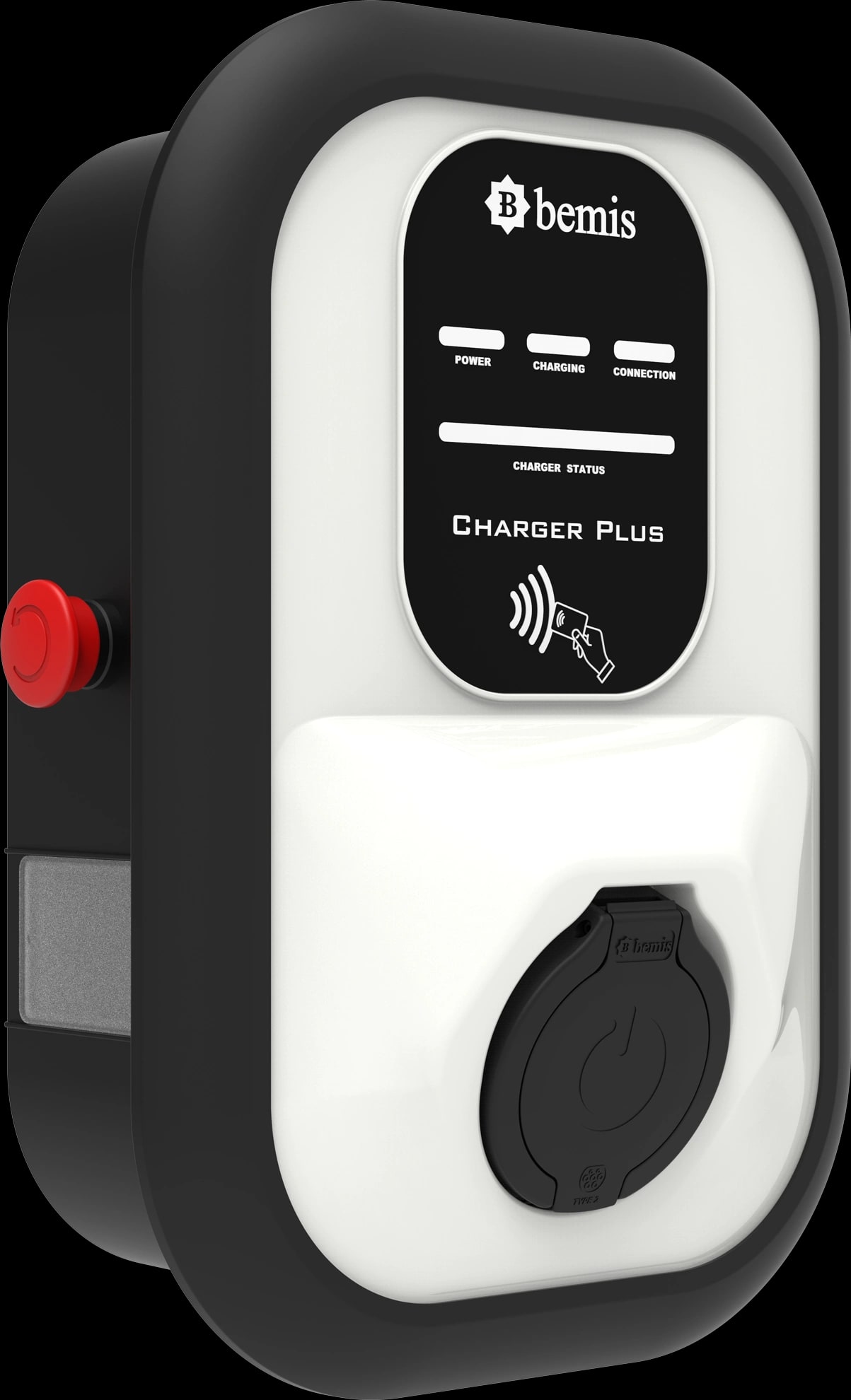
The Bemis Charger Plus 2 and Charger Pro 2 offer exactly this flexibility: the power level is adjustable between 4-7-11-22 kW (6-10-16-32 A). The smart charging algorithm of the Plus 2 adapts automatically to the maximum current the car accepts; the Automatic Charging Start feature resumes charging by itself when the power comes back after a cut. The Pro 2 adds advanced load management (DLM), OCPP 1.6 support and user authorisation; on the connected models, remote on/off, a timer and charging history are handled through the mobile app. Both models can be installed outdoors: the enclosure is rated IP66 on the Charger Plus 2 and IP65 on the Charger Pro 2.
Why is dynamic load balancing an advantage in a solar home?
Load balancing (DLM) monitors the home's total consumption and automatically adjusts the charging power to the safe limit of the installation. In a solar home the practical effect is this: at midday, when production is high and no large appliance is running, charging proceeds at high power; when loads such as the oven or the air conditioner come on, charging is automatically turned down, and when the load falls it rises again. This both protects the main breaker and makes the most efficient use of the hours when production is plentiful, without straining the installation. Using the timer to schedule charging for the midday window when production peaks is another simple and effective way to increase the share covered by solar.
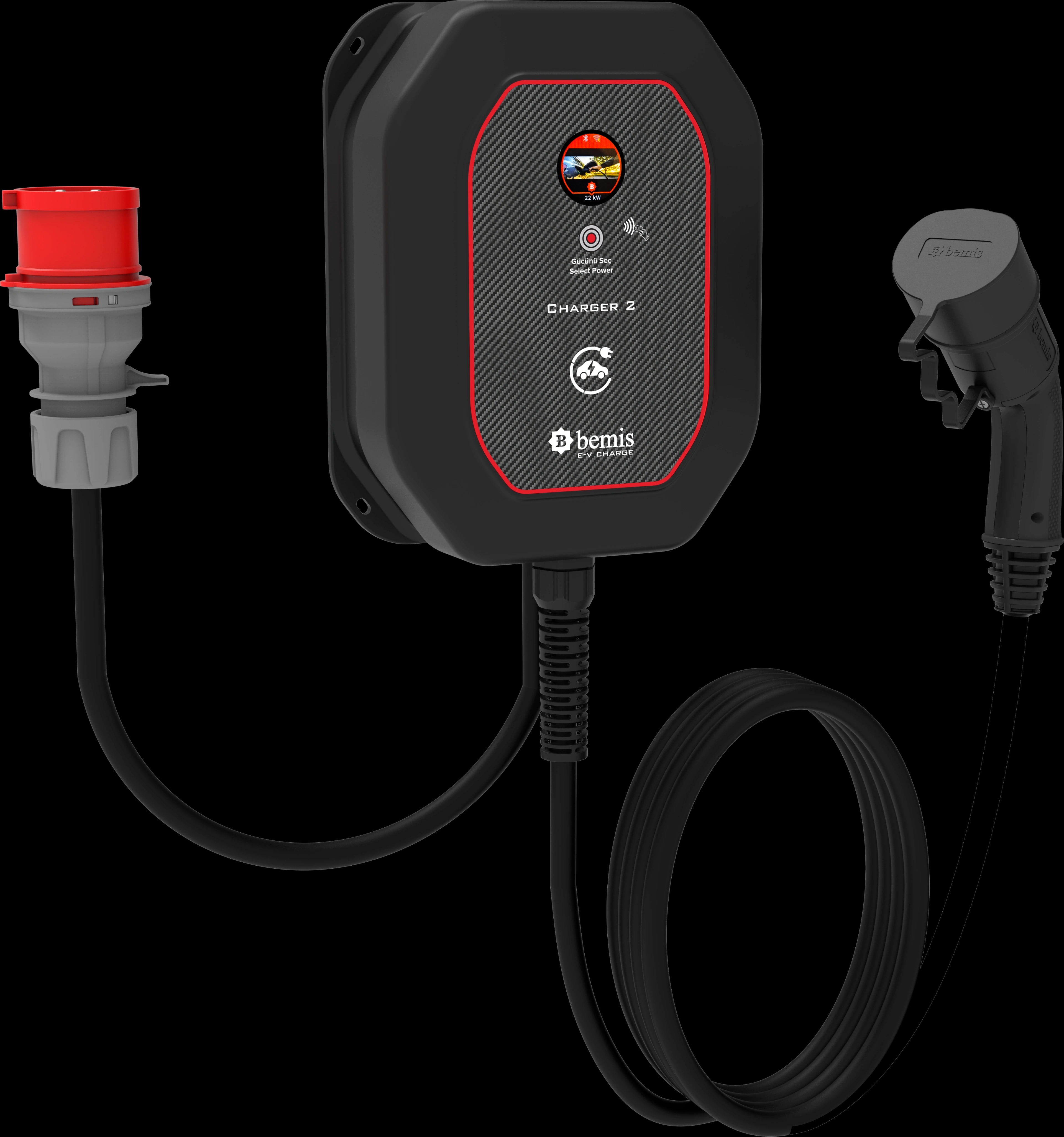
For those who do not want a fixed installation, or who have a second location such as a solar-powered country house or summer home, the Bemis Pro Mobile 2 is a practical alternative: on this portable three-phase charger, which offers 11-22 kW, the current is set across 6 steps (6/10/16/20/25/32 A) from the mobile app or the button on the device. The lower steps make it easier to cover a significant part of the charge from solar even on small systems with limited production. Its IP65 protection rating and -30°C / +55°C operating range make the device usable outdoors all year round; a carrying case and a single-phase plug adapter come in the box.
Choose your solar-compatible charger with adjustable current. Let us decide together on the model that suits your use.
See the AC Wallbox Charging StationsHow does charging continue at night and on cloudy days?
The greatest comfort of an on-grid system is that it never stops: when there is not enough sun, the shortfall is topped up from the grid without you doing anything. In night-time charging the energy comes entirely from the grid; on cloudy days production falls but does not go to zero: the panels keep making a reduced contribution and the grid covers the rest. Car charging is never left half-finished in any scenario. If your electricity tariff is cheaper at night, you can also manage the cost of the sunless hours by scheduling charging for the night with the timer on the charger.
Systems with battery storage (with a hybrid inverter) store the surplus energy produced during the day and make it available in the evening; that energy primarily eases the home's own consumption. Because a car's battery is far larger than domestic storage batteries, covering a full night-time car charge entirely from a home battery is not realistic in most installations; storage should be thought of as support, not as a full car charge. In short, the most efficient set-up is: schedule charging for sunny hours where possible, adjust the current to production, and top up the remaining need from the grid on the night tariff.
Bemis produces AC charging stations for homes and businesses, with the heritage of Bemis Teknik, which has been manufacturing in Bursa since 1994. Once you have had the panel and inverter side of your solar system engineered by your solar company, you can complete the charging side with the adjustable-current Charger Plus 2, Charger Pro 2 or the portable Pro Mobile 2. To decide which model suits your use, you can reach us from our Contact page.
Frequently Asked Questions
Can an electric car be charged directly from a solar panel?
The direct current (DC) electricity produced by the panel is not fed to the car directly; it is first converted by the inverter into the alternating current (AC) used in the home and passed to the main distribution board. Since your home charger works connected to that board, a significant part of the charging you do while the sun is producing is covered by the panels; the remainder is automatically topped up from the grid. So "charging from the panel" in practice means charging from the home installation fed by a grid-connected (on-grid) solar system. In this set-up the charger needs no special hardware; any AC wallbox with a Type 2 connector works with the system.
How many solar panels are needed to charge an electric car?
Let us explain with a hypothetical example: electric cars use roughly 15-20 kWh per 100 km; a driver covering 40 km a day has a daily need of 6-8 kWh. If we assume that 1 kWp of installed capacity produces on average about 3.5-4.5 kWh a day in Türkiye, then 1.5-2 kWp (that is, 4-5 panels of 450 Wp) is enough for this use. For 100 km a day the need rises to 4-5 kWp (9-12 panels). These figures are only meant to give an idea; the real number of panels is determined by the solar company's site survey, taking into account the orientation and pitch of your roof, your region, the season and the home's own consumption.
Does solar charging require a special charger?
No. In a home with a grid-connected solar system, a standard Type 2 AC charging station works without any problem, because the device draws energy not from the panels but from the home's distribution board. The feature that improves efficiency is current adjustment: on the Bemis Charger Plus 2 and Charger Pro 2 the power is adjustable between 4-7-11-22 kW; on the portable Pro Mobile 2 the current is selected across 6 steps (6-32 A) from the mobile app or the button on the device. The lower steps bring the power drawn closer to solar production, while the higher steps speed up charging in the hours when production is plentiful. The same device is therefore used efficiently both in sunny and in sunless hours.
Do a hybrid inverter and a home charger work together?
Yes. A hybrid inverter is the equipment that manages the solar panels and, where present, the battery storage, and feeds the home's main board. The home charger is a separate device connected to that board. The two are not wired directly to each other; they work together over the same installation, which is why the inverter brand and the charger brand do not have to match. Bemis wallbox models can be installed in any home with an on-grid or hybrid system, independently of the panel and inverter infrastructure. It is enough for the connection to be made over the board, with suitable protective devices and by a qualified electrical contractor. Confirming the suitability of the installation with a survey before the work keeps both the solar and the charging investment on a sound footing.
What happens to car charging at night or in cloudy weather?
In grid-connected (on-grid) systems charging is never interrupted: when solar production is not enough, the shortfall is automatically topped up from the grid. Night charging is supplied entirely from the grid; on cloudy days the panels keep making a reduced contribution and the difference again comes from the grid. If your electricity tariff is cheaper at night, you can also manage the cost of the sunless hours by scheduling charging for the night with the timer on the charger. Systems with battery storage carry the daytime surplus into the evening; however, since a car battery is far larger than a domestic one, storage should be thought of as support rather than as a full car charge.
Featured Products
Solutions we manufacture in our own facility, related to this guide.
Let's choose the right product together
Not sure which product fits your vehicle and electrical installation? Get in touch and our authorised dealer or sales team will guide you.
- Manufacturing in our own facility since 1994
- CE-certified product family
- 2-year manufacturer warranty
- +90 542 773 72 94 trade@bemis.com.tr
