EV Charging Connector Types: The Difference Between Type 2, CCS2 and CHAdeMO
For newcomers to the electric vehicle (EV) world, one of the most confusing topics is charging connectors. Names like Type 2, CCS2, CHAdeMO and GB/T come up often, but which one does what is frequently unclear. In this article we define the most common charging connector types one by one, compare the differences between them, and explain in particular which standard applies in Turkey.
The basic distinction is this: some connectors are for AC (alternating current) charging, others for DC (direct current) fast charging. At home and at work you usually charge at slow to medium speed with AC; on long journeys you take a high-power charge in minutes at public DC stations. Connector types are largely shaped by this AC/DC distinction.
What is Type 1 (SAE J1772)?
Type 1 is a single-phase AC charging connector based on the SAE J1772 standard. It offers power in roughly the 3.7–7.4 kW range. It's seen more in North American, Japanese and some older Asian-made electric vehicles. It's not common in Europe and Turkey; in these markets the AC connector of the vehicles sold is almost always Type 2.
What is Type 2 (Mennekes)?
Type 2 (Mennekes, IEC 62196-2) is the AC charging standard for Europe and Turkey. It supports both single-phase and three-phase charging. The common power range in home and workplace AC charging is 7.4–22 kW (rarely reaching up to 43 kW AC). The AC charging connector of electric vehicles sold in Turkey is almost always Type 2, so when it comes to home charging, the connector you'll deal with is most likely this one.
What is CCS2 (Combo 2)?
CCS2 (Combined Charging System / Combo 2) is the Type 2 connector with two DC pins added beneath it, and it's for DC fast charging. It's the DC standard for Europe and Turkey. The typical power range starts at 50 kW and rises to 350 kW and above. An important point: on the same vehicle, Type 2 (AC) on top and CCS2 (DC) below are usually present together. In other words, CCS2 is not a rival to Type 2 but its DC-enabled, enlarged version.
What is CHAdeMO?
CHAdeMO is a DC fast-charging standard of Japanese origin. It was common on some vehicles such as the older Nissan Leaf. However, its use in Europe is steadily declining and being phased out; the new generation of vehicles has largely moved to CCS2. In Turkey the CHAdeMO connector is rarely seen.
What is GB/T?
GB/T is China's national charging standard and uses separate connectors for AC and DC. You may come across it on some Chinese-made electric vehicles. It's not the main standard of the European and Turkish markets.
The difference between Type 2, CCS2 and CHAdeMO: a quick comparison
When we place the three main connectors side by side with their basic features, the difference becomes clear:
- Type 2 (Mennekes): AC charging. Single-/three-phase. Common power 7.4–22 kW. The AC standard for Europe and Turkey. The connector of home and workplace charging.
- CCS2 (Combo 2): DC fast charging. The Type 2 connector with 2 DC pins added beneath it. Typically 50–350+ kW. The DC standard for Europe and Turkey. The connector of public fast charging.
- CHAdeMO: DC fast charging. Japanese standard. Was common on older vehicles (e.g. the older Nissan Leaf). Declining/being phased out in Europe. Rare in Turkey.
- Type 1 (J1772): Single-phase AC, ~3.7–7.4 kW. Focused on North America/Japan. Not common in Turkey.
- GB/T: Chinese standard, separate AC and DC connectors. On some Chinese-made EVs.
In short, the distinction has two layers: first AC or DC (Type 2 = AC, CCS2 and CHAdeMO = DC), then which region's standard (Type 2/CCS2 = Europe-Turkey, CHAdeMO = Japan, GB/T = China).
Which charging connector is used in Turkey?
In Turkey the picture is quite clear: Type 2 dominates on the AC side and CCS2 on the DC side. In home and workplace AC charging you'll come across Type 2 cables and Type 2-connector wallboxes. At public DC fast-charging stations, the CCS2 connector is the standard. CHAdeMO is rare and steadily declining.
Tesla vehicles also comply with these standards: in Europe and Turkey they use Type 2 for AC and CCS2 for DC, and the European Supercharger network also runs over CCS2. So when you buy an EV in Turkey, you'll almost certainly come across a vehicle with Type 2 on top and CCS2 below.
Turkey in a nutshell: at home and at work, AC = Type 2; on long journeys, public DC = CCS2. CHAdeMO is rare and declining.
Practical tip: which connector in which situation?
Your charging habits are largely determined by your daily routine. For most drivers, the practical upshot is this:
- Home and workplace (daily charging): AC with Type 2. The right product is a Type 2-connector AC wallbox or a Type 2 charging cable. This is enough for the vehicle to charge overnight.
- Long journeys (fast charging): DC with CCS2. At public DC stations you take a high-power charge in minutes; these stations' cables are already fixed, so you don't need to bring your own.
- When choosing your cable, check your vehicle's connector type and whether your home connection is single- or three-phase; this directly affects the power you'll get.
So you don't need to buy a separate DC unit for long journeys; that infrastructure is ready at public stations. Your real investment is the home/workplace AC solution that handles daily charging: a Type 2 wallbox of the right power and a suitable Type 2 cable.
The right equipment with Bemis E-V Charge
Bemis E-V Charge is the EV charging brand of Bemis Teknik Elektrik A.Ş., a manufacturer since 1994, and its products are made in Bursa. In line with the standards in Turkey, it offers Type 2 solutions on the AC side and CCS2-connector units on the DC side.
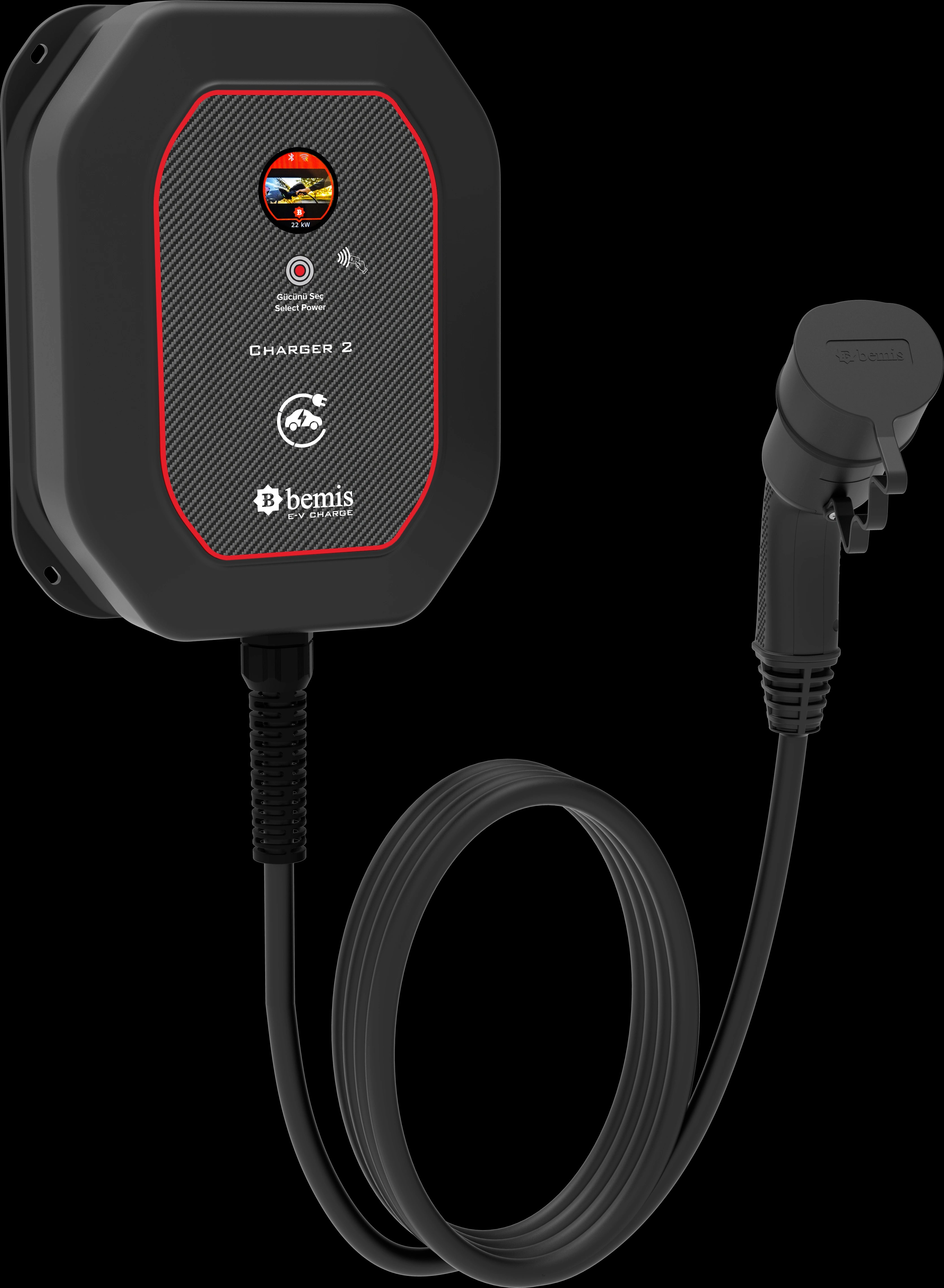
- AC wallbox options in the 3.7–22 kW range for home and workplace.
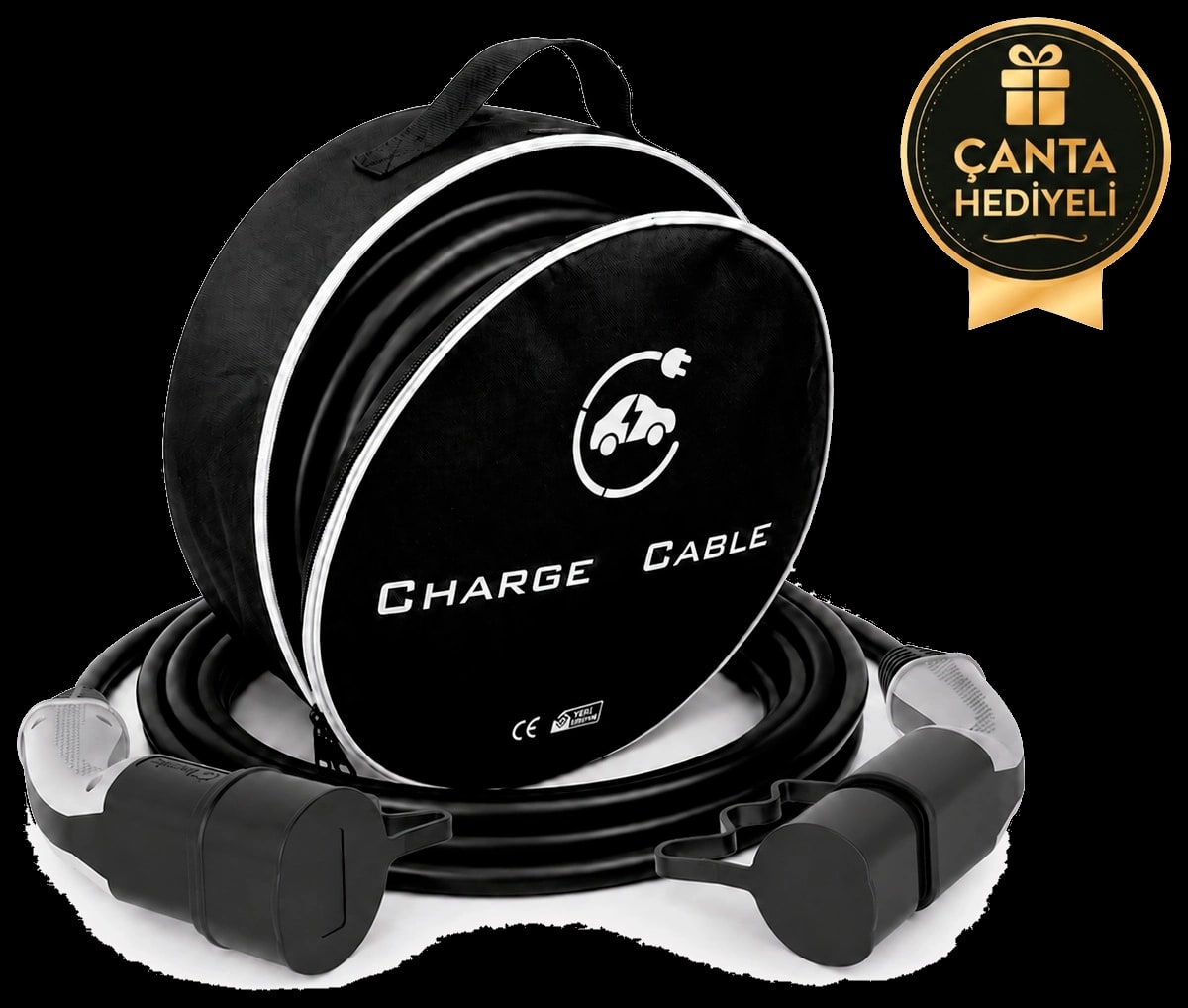
- Portable AC charging solutions with Mode 2 and Mode 3 Type 2 charging cables.
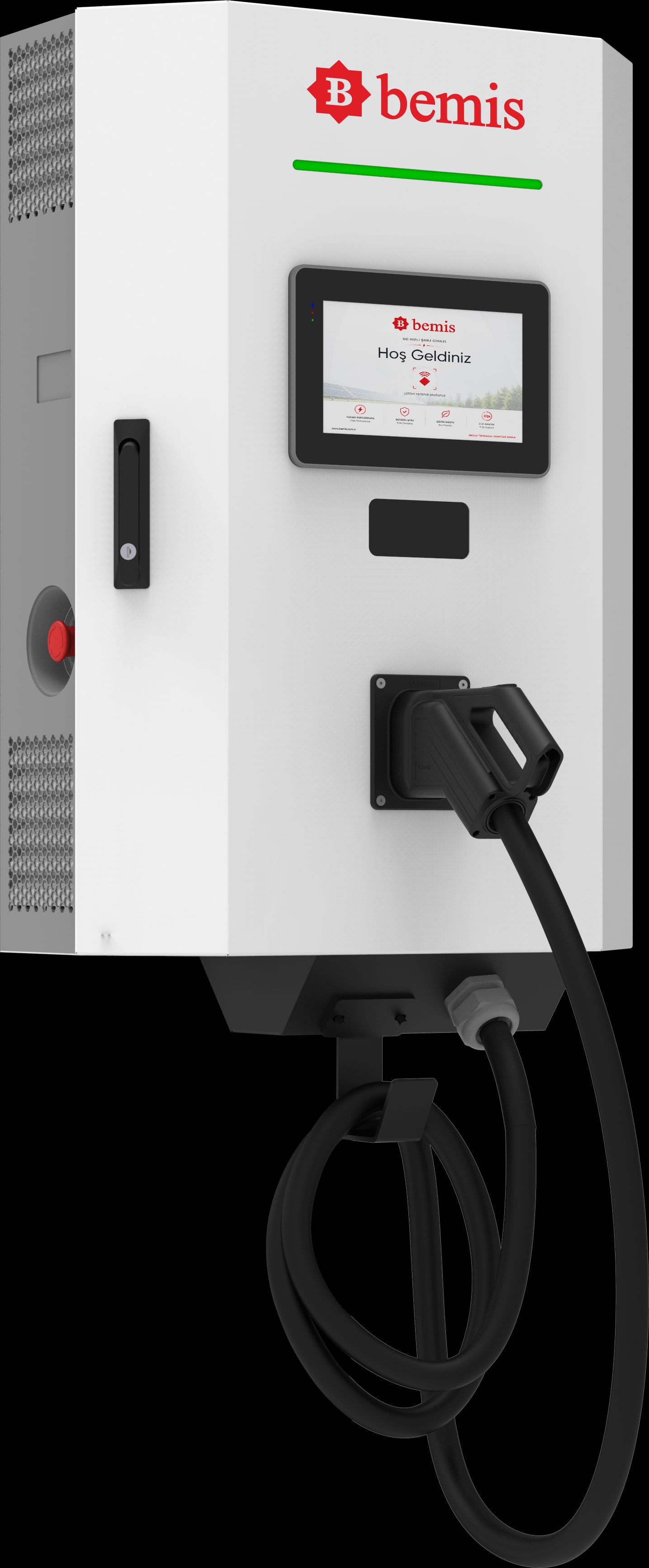
- CCS2-connector DC fast-charging units for long journeys and public use (e.g. the 40 kW BEVDC).
- V2L / C2L adapter solutions for transferring power from your vehicle to household electricity.
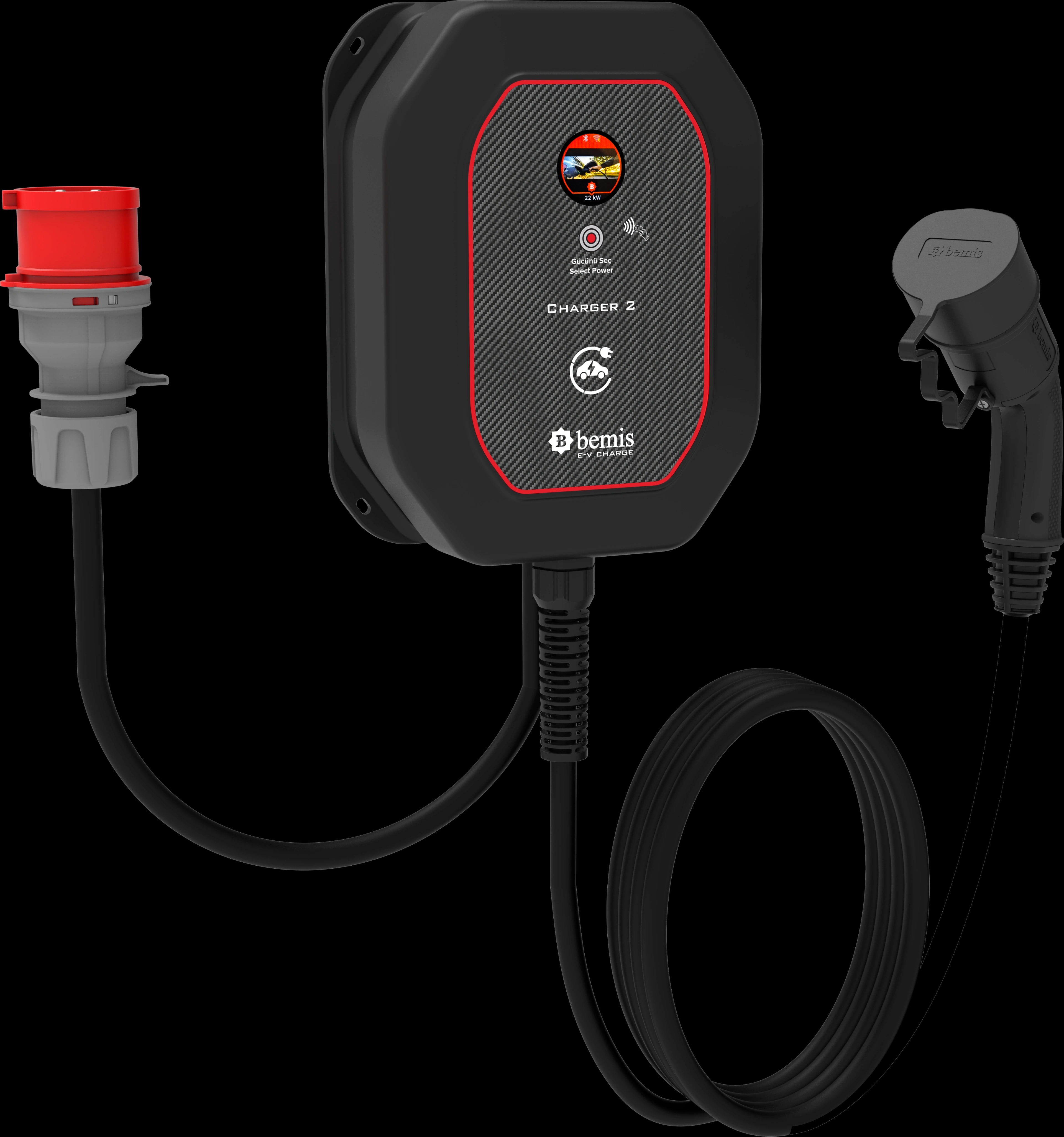
Explore our in-house manufactured Type 2 AC wallbox models for home charging.
AC Wallbox ModelsFrequently Asked Questions
Are Type 2 and CCS2 the same?
Not the same, but close relatives. Type 2 (Mennekes) is the AC charging connector for Europe and Turkey; it supports both single- and three-phase charging and its common power range is 7.4–22 kW. CCS2 is the Type 2 connector with two DC pins added beneath it, and it's for DC fast charging; typical power starts at 50 kW and rises to 350 kW and above. On most electric vehicles, Type 2 (AC) on top and CCS2 (DC) below are present together. In other words, CCS2 is not a rival to Type 2 but its DC-enabled, extended version; one is for home charging, the other for public fast charging.
Which charging connector is used in Turkey?
In Turkey the picture is quite clear: Type 2 dominates on the AC side, and CCS2 on the DC fast-charging side. In home and workplace AC charging you'll come across Type 2 cables and Type 2-connector wallboxes; at public DC fast-charging stations, the standard is the CCS2 connector. CHAdeMO is rarely seen and steadily declining. Tesla vehicles also comply with these standards; in Europe and Turkey they use Type 2 for AC and CCS2 for DC. So when you buy an EV in Turkey, you'll almost certainly come across a vehicle with Type 2 on top and CCS2 below.
Is CHAdeMO common in Turkey?
No. CHAdeMO is a DC fast-charging standard of Japanese origin and was common on some older vehicles (for example the older Nissan Leaf). However, its use in Europe is steadily declining and being phased out; the new generation of vehicles has largely moved to CCS2. In Turkey, CHAdeMO is a rarely encountered connector. In practice this means: if you're buying a new electric vehicle, the connector you'll deal with in DC fast charging will not be CHAdeMO but almost certainly CCS2. That's because the standard of public DC stations in Turkey is CCS2. So when planning equipment and charging for Turkey, you don't need to consider CHAdeMO as a priority; your focus should be Type 2 and CCS2.
Is a vehicle with a Type 1 connector suitable for Turkey?
Type 1 (SAE J1772) is a single-phase AC charging connector and offers power in roughly the 3.7–7.4 kW range. It's seen more in North American, Japanese and some older Asian-made electric vehicles. It's not common in Europe and Turkey; in these markets the AC connector of the vehicles sold is almost always Type 2. Consequently, the daily charging infrastructure in Turkey is built on Type 2, and home/workplace equipment is designed accordingly. If you come across a vehicle with a Type 1 connector, you'll need to separately assess the need to adapt it to Turkey's widespread Type 2 infrastructure.
What connector and equipment do I need for home charging?
Home charging is done with AC, and the right connector is Type 2. The product you need is a Type 2-connector AC wallbox (usually in the 7.4–22 kW range) or a Type 2 charging cable. This solution is enough for your vehicle to charge while parked overnight. When choosing equipment, check two things: your vehicle's connector type and whether your home electrical connection is single-phase or three-phase. This directly affects the power you'll get; for example, 11 kW or 22 kW requires a three-phase installation. You don't need to buy a separate DC unit for long journeys.
Which connector do I use on long journeys?
On long journeys you use public DC fast-charging stations, and in Turkey their standard is CCS2. At these stations you can take a high-power charge in minutes. One important convenience: these stations' cables are already fixed, so you don't need to carry a DC cable with you or buy a separate DC unit; that infrastructure waits ready along the route. Your real investment is the home or workplace AC solution that handles daily charging. So the practical rule is this: daily charging at home with Type 2 on AC, and long journeys along the route with CCS2 on DC.
Which connector do Tesla vehicles use in Turkey?
Tesla uses Type 2 for AC charging and CCS2 for DC fast charging in Europe and Turkey; that is, it complies with the general Turkish standard. The Supercharger network in Europe also runs over CCS2. The practical meaning of this is: even if you own a Tesla, the equipment you need for daily home charging is, as with other EVs, a Type 2-connector AC wallbox or a Type 2 cable. On long journeys you can use public CCS2 stations. So the rule that applies for Tesla in Turkey is the same: at home, AC with Type 2; on long journeys, DC with CCS2.
Featured Products
Solutions we manufacture in our own facility, related to this guide.
Let's choose the right product together
Not sure which product fits your vehicle and electrical installation? Get in touch and our authorised dealer or sales team will guide you.
- Manufacturing in our own facility since 1994
- CE-certified product family
- 2-year manufacturer warranty
- +90 542 773 72 94 trade@bemis.com.tr
