EV Charging Time: How Many Hours to Full? (AC and DC)
The most common question before buying an electric vehicle is: "How many hours does it take to charge?" The answer isn't a single figure; it depends on the size of the battery, the power of the charging device and, most importantly, the maximum power the vehicle can accept. In this guide we give you a simple formula you can use to work out the time yourself, and share worked examples for AC (slow/normal) and DC (fast) charging.
The basic charging-time formula
You can roughly find the charging time with a single division. You divide the energy to be charged (kWh) by the charging power (kW):
Time (hours) ≈ Energy to be charged (kWh) ÷ Charging power (kW)
In real life there are heat and conversion losses during charging. That's why adding roughly 10–20% to the formula's result gives a more accurate estimate. For example, dividing 55 kWh of energy by 11 kW gives 5 hours; with losses included, in practice you should reckon on around 5.5 hours.
A point to note: the "energy to be charged" is not the whole battery but only the portion you want to fill. If you're going from 10% to 100%, you'll deliver about 54 kWh into a 60 kWh battery; if you start from 30%, that figure drops much lower.
AC (slow/normal) charging times
AC charging, used at home and at work, runs on the Type 2 connector in Turkey. The common power levels are:
- Single-phase 7.4 kW (32A): the most suitable option for a standard home installation
- Three-phase 11 kW (16A): the power most modern EVs support
- Three-phase 22 kW (32A): the fastest AC option (if the vehicle supports it)
Worked example: 60 kWh battery, from 10% to 100%
- With a 7.4 kW wallbox ≈ 8 hours (ideal for an overnight charge)
- With an 11 kW wallbox ≈ 5.5 hours
- With a 22 kW wallbox ≈ 3 hours (if the vehicle accepts 22 kW AC)
IMPORTANT: The vehicle's accepted power limit is the deciding factor
No matter how powerful your charging device is, the vehicle isn't obliged to accept all of that power. On the AC side, the vehicle's "onboard charger" caps the speed. Many electric vehicles accept a maximum of 11 kW AC; some are limited to 7.4 kW, others to 22 kW.
Even if you buy a 22 kW wallbox, if your vehicle accepts only 11 kW the charge will proceed at 11 kW. In other words, the deciding factor is the lower of the two values: the charging device and the vehicle.
The same limit applies on the DC side: whatever the vehicle's "DC peak power" is, a more powerful fast-charging station can't exceed that speed. That's why the best approach before choosing a device is to find out both your vehicle's AC onboard and DC peak power.
DC (fast) charging times
DC fast charging is used at public stations with the CCS2 connector in Turkey and is generally preferred for long journeys. Typical power levels are 50 kW, 150 kW, 350 kW. There's a reason DC times are almost always given as from 10% to 80%: once the battery passes 80% the charging curve slows down (taper) and the final 20% takes disproportionately longer.
Worked example: 60 kWh battery, from 10% to 80%
- With 50 kW DC ≈ 45–60 minutes
- With 150 kW DC ≈ 20–30 minutes (if the vehicle accepts this power)
- The portion from 80% to 100% takes disproportionately longer; on a long journey it usually makes more sense to stop at 80% and carry on
On DC too, the vehicle's DC peak power is the deciding factor. Even if you connect to a 150 kW station, if your vehicle accepts a maximum of 100 kW the charge is limited to that speed.
Factors that affect charging time
- Battery capacity (kWh): a bigger battery takes longer
- Charging power (kW): the power the device provides
- The maximum power the vehicle accepts (AC onboard + DC peak): this is often the real limit
- Starting charge percentage: starting from 30% takes far less time than from 0%
- Temperature: cold weather can slow charging
- The DC charging curve (taper): the slowdown after 80%
- The installation: single-phase or three-phase
Practical tip: AC for daily use, DC for long journeys
Most drivers charge the battery not from 0% each day but from a level like 30–40%. That's why real daily charging time is far shorter than the full-charge times above. For daily use, an AC wallbox at home or work (which charges comfortably overnight) is generally sufficient; for long-journey needs, DC fast-charging stations along the route come into play.
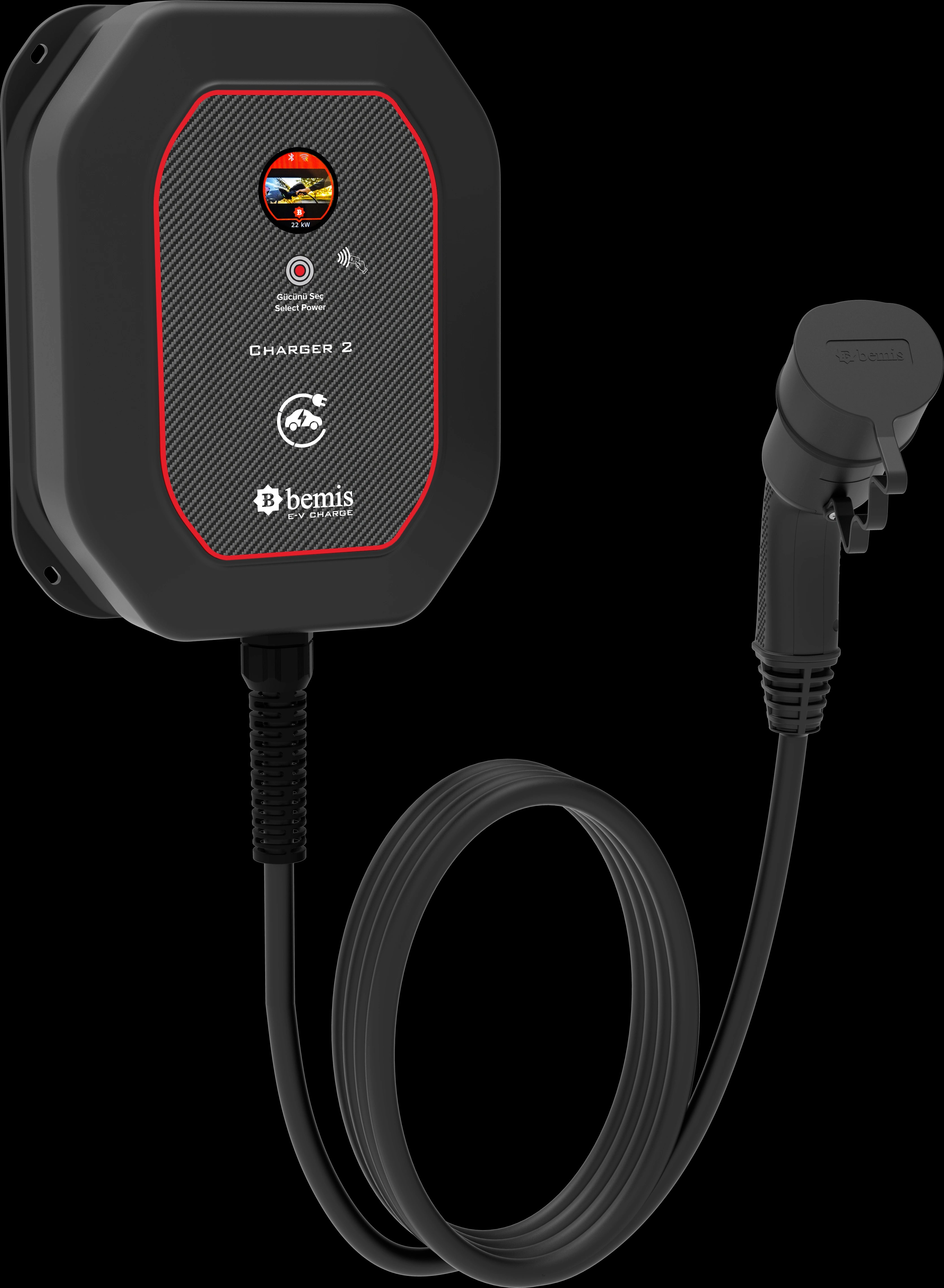
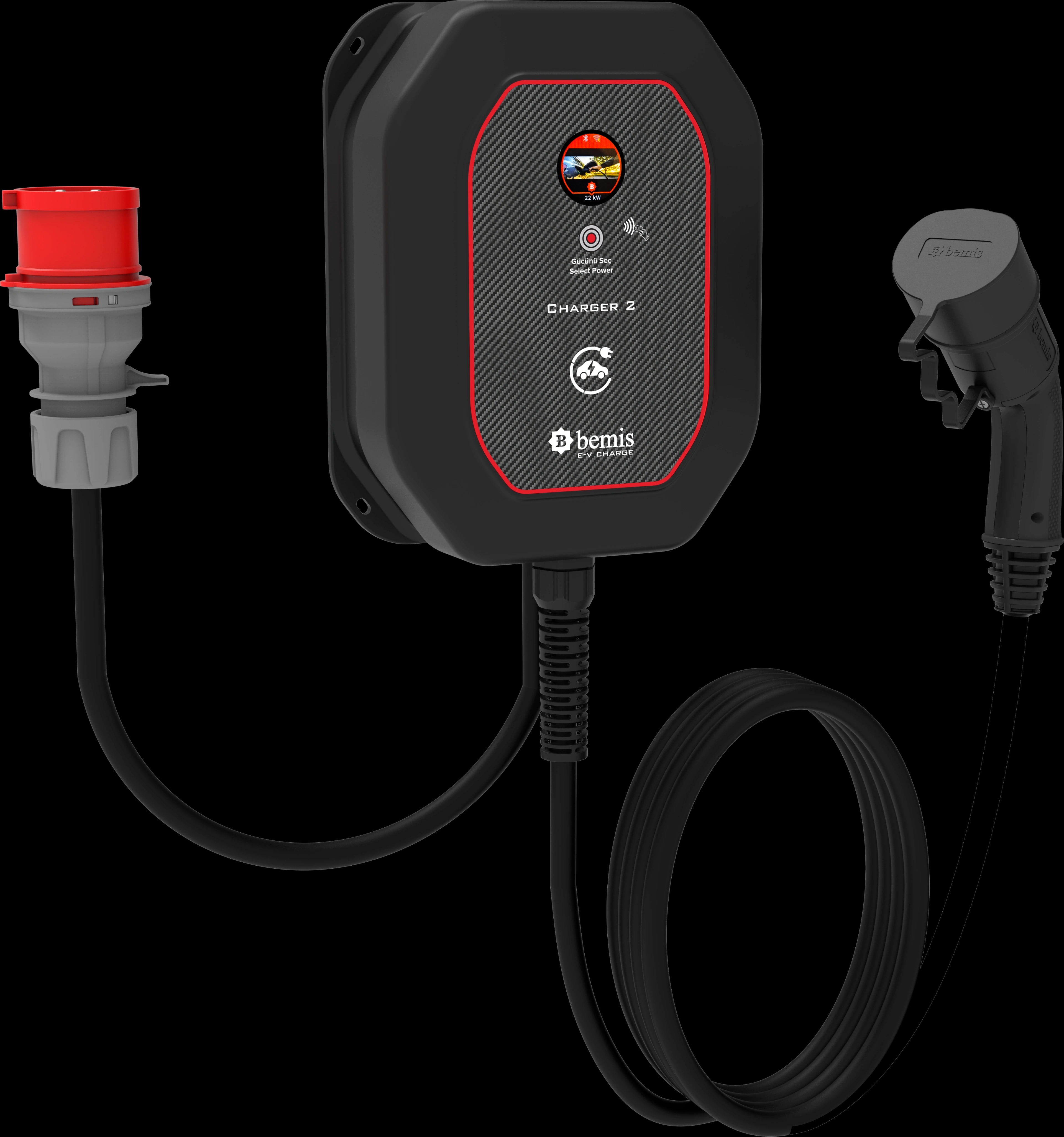
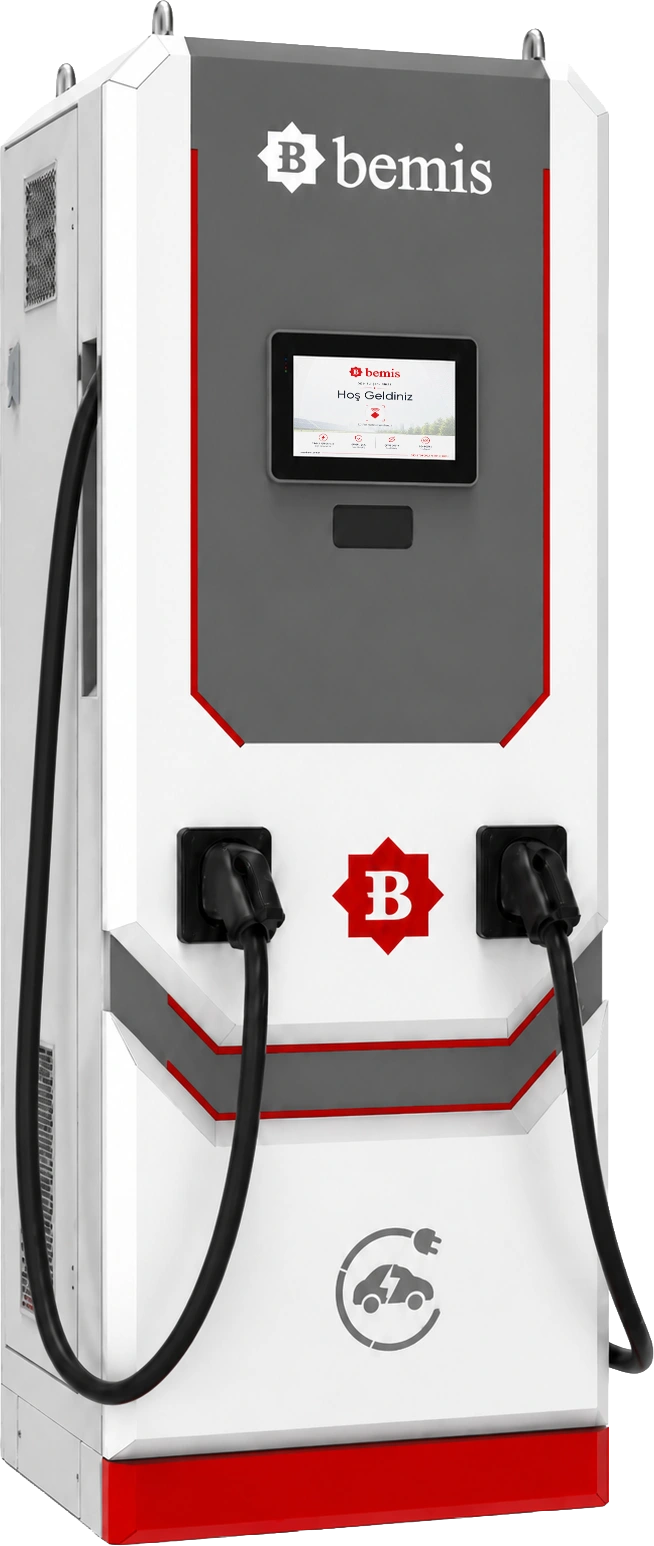
Bemis E-V Charge, as the EV charging brand of Bemis Teknik Elektrik A.Ş. (a manufacturer since 1994), produces AC wallboxes in the 3.7–22 kW range, Type 2 cables, portable AC charging solutions and a CCS2 DC fast-charging unit (e.g. the 40 kW BEVDC) in Bursa. The products are CE, IP65-66 and OCPP compliant. Keeping your vehicle's accepted power in mind when choosing the right device stops you paying for more power than you need.
Explore AC wallbox models for use at home or work.
View Wallbox ProductsFrequently Asked Questions
How many hours does an electric vehicle take to charge?
There's no single figure; the time depends on the size of the battery, the charging power and, most importantly, the maximum power the vehicle can accept. For a rough calculation, divide the energy to be charged (kWh) by the charging power (kW), then add about 10–20% for heat and conversion losses. For example, filling a 60 kWh battery from 10% to 100% takes roughly 8 hours with 7.4 kW, about 5.5 hours with 11 kW, and about 3 hours with 22 kW (if the vehicle accepts that power). Remember, the energy you deliver is not the whole battery but only the portion you want to fill; if you start from 30%, the time is far shorter.
How long does it take to charge a vehicle at 11 kW?
Filling a 60 kWh battery from 10% to 100% at 11 kW AC takes roughly 5.5 hours, losses included. This is the most common scenario in home charging, because most modern electric vehicles can accept 11 kW AC. 11 kW generally requires a three-phase installation. In real life this time is often even shorter, because drivers usually top up the battery not from 0% but from a level like 30–40%. So an 11 kW wallbox is a practical daily charging solution that will comfortably fill the vehicle overnight.
I bought a 22 kW wallbox but my vehicle charges more slowly. Why?
The reason is that the AC charging speed is capped by the charger inside the vehicle (the onboard charger). No matter how powerful your charging device is, the vehicle isn't obliged to accept all of that power. Many electric vehicles accept a maximum of 11 kW AC; some are limited to 7.4 kW. So if your vehicle accepts 11 kW, the charge takes place at 11 kW even if you connect a 22 kW wallbox. The deciding factor is the lower of the two values: the charging device and the vehicle. That's why the best approach before buying a device is to find out your vehicle's AC accepted power.
How many minutes does DC fast charging take?
For a 60 kWh battery, charging from 10% to 80% takes roughly 45–60 minutes with 50 kW DC and about 20–30 minutes with 150 kW DC (if the vehicle accepts that power). There's a reason DC times are almost always given up to 80%: once the battery passes 80% the charging curve slows down (taper) and the final 20% takes disproportionately longer. Also, as with AC, the vehicle's DC peak power is the deciding factor on DC; even if you connect to a 150 kW station, if your vehicle accepts a maximum of 100 kW the charge is limited to that speed.
Why is DC charging usually given up to 80%?
Because, to protect the battery, the charging curve slows down markedly after 80%; this is called taper. Because of this slowdown, the final stretch from 80% to 100% takes disproportionately longer than the first 80%. As a result, DC worked examples are almost always given from 10% to 80%. The practical upshot is this: on a long journey, waiting a long time at the station to top the vehicle up to 100% is usually not efficient; stopping at 80% and carrying on saves time and avoids tying up the station unnecessarily. A full daily charge is done more at home with AC.
In daily use, is the vehicle charged from empty every day?
No. Most drivers top up the battery not from 0% each day but from a level like 30–40%. That's why real daily charging time is far shorter than the full-charge times in the guides, because the energy you need to add (kWh) is far less. The higher the starting charge percentage, the shorter the time; starting from 30% finishes far faster than starting from 0%. In practice, an AC wallbox at home or work comfortably completes this partial charge while the vehicle is parked overnight. So in daily use there's no obligation to "fill from empty"; topping up as much as you've used overnight is enough, and this is done smoothly with AC.
Should I install AC or DC fast charging at home?
For daily use, an AC wallbox (7.4–22 kW) at home or work is generally sufficient; the vehicle charges comfortably overnight and most of the daily need is covered this way. Because most drivers already top up the battery not from 0% but from a level like 30–40%, the real daily time is short. DC fast charging, on the other hand, is more useful on long journeys, at public stations along the route. Keeping your vehicle's accepted power in mind when choosing the right device is important; this stops you paying for more power than you need. In short: daily charging is handled at home with AC, and long-journey needs with DC stations along the route; the two complement each other.
Featured Products
Solutions we manufacture in our own facility, related to this guide.

Let's choose the right product together
Not sure which product fits your vehicle and electrical installation? Get in touch and our authorised dealer or sales team will guide you.
- Manufacturing in our own facility since 1994
- CE-certified product family
- 2-year manufacturer warranty
- +90 542 773 72 94 trade@bemis.com.tr
